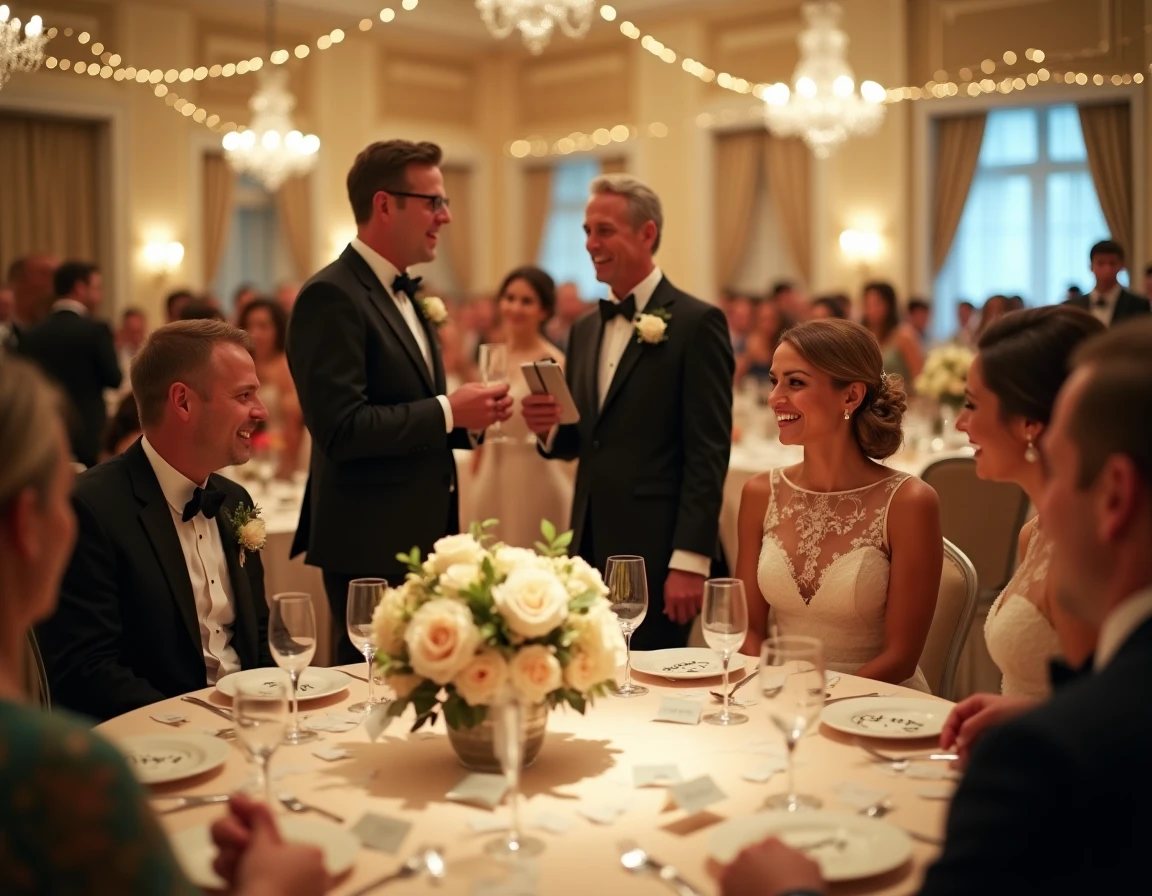
Word games at weddings occupy a unique niche in evening entertainment. While most lists focus on physical or musical activities, the verbal register (puns, riddles, rebuses) engages all guests without heavy materials. The choice of format depends on the time of day, the profile of the guests, and the language spoken at the table.
1. The couple’s rebus on an easel
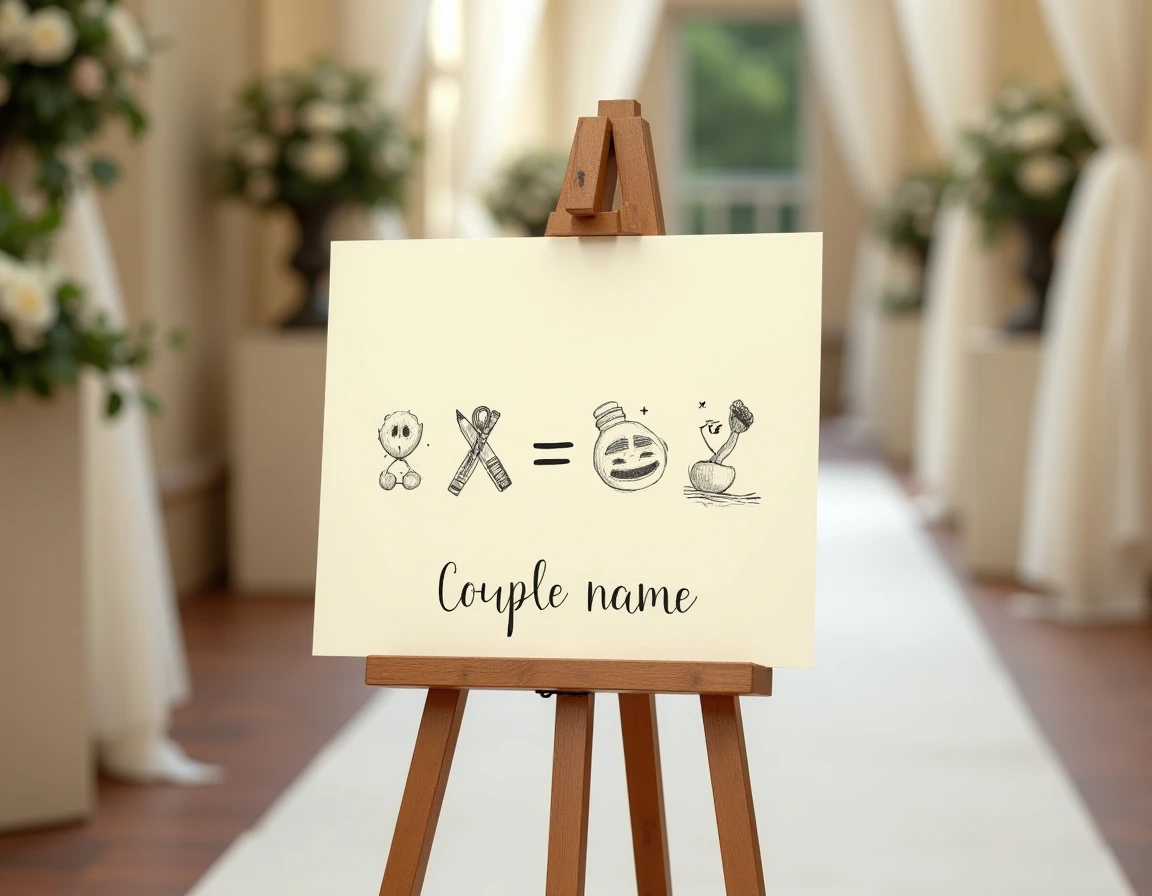
Each table receives an easel with a rebus to decode, made up of images and syllables that form a phrase related to the couple. The first group to find the solution wins a symbolic prize.
This format works well during the cocktail hour when guests are looking for an excuse to mingle. Plan for rebuses of varying difficulty to avoid discouraging less playful tables.
2. The nuptial exquisite corpse
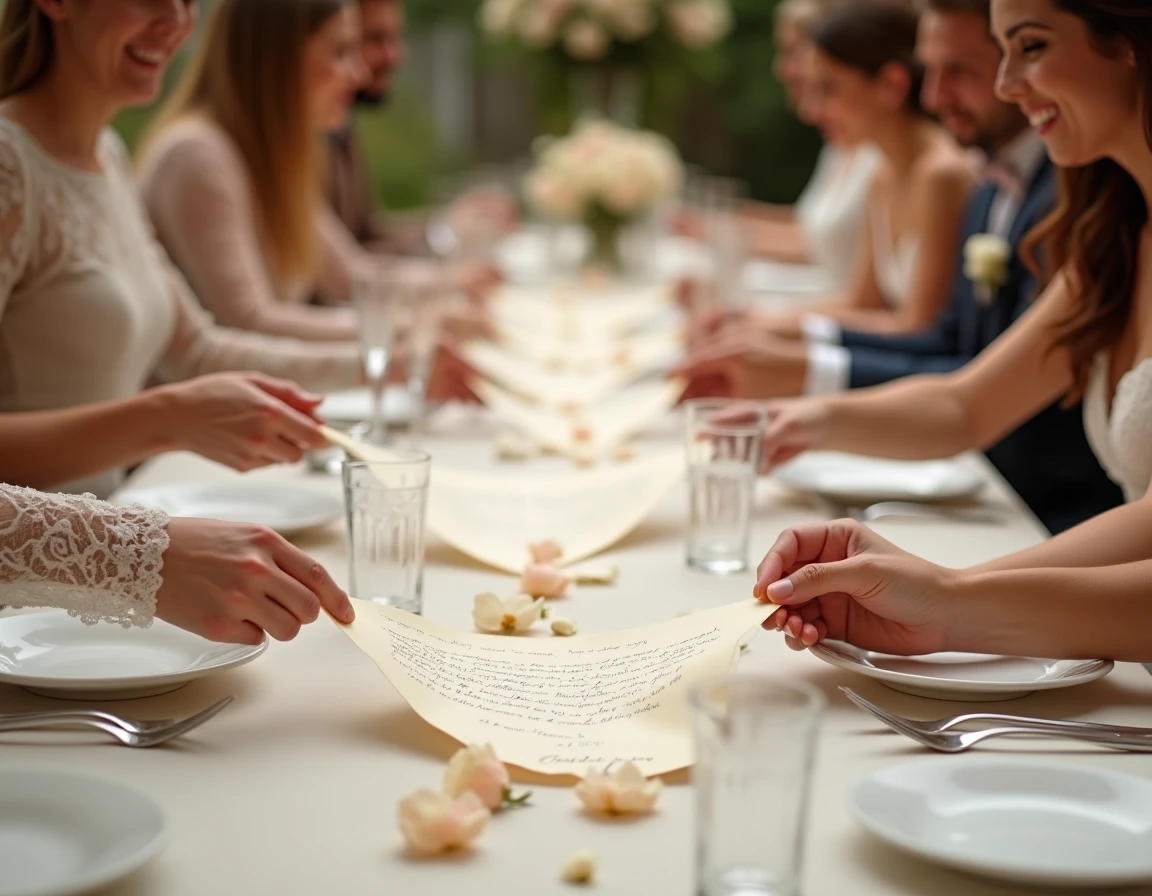
Each guest writes a word or a phrase fragment on a folded paper, according to a specific instruction (an adjective, a place, an action). The papers circulate, and the final reading produces absurd sentences about the married couple’s married life.
Reserving this game for dessert allows you to take advantage of the relaxed atmosphere at the end of the meal. The word games with the wedding take on a collective form that even includes the most reserved guests.
3. The true or false quiz about the newlyweds
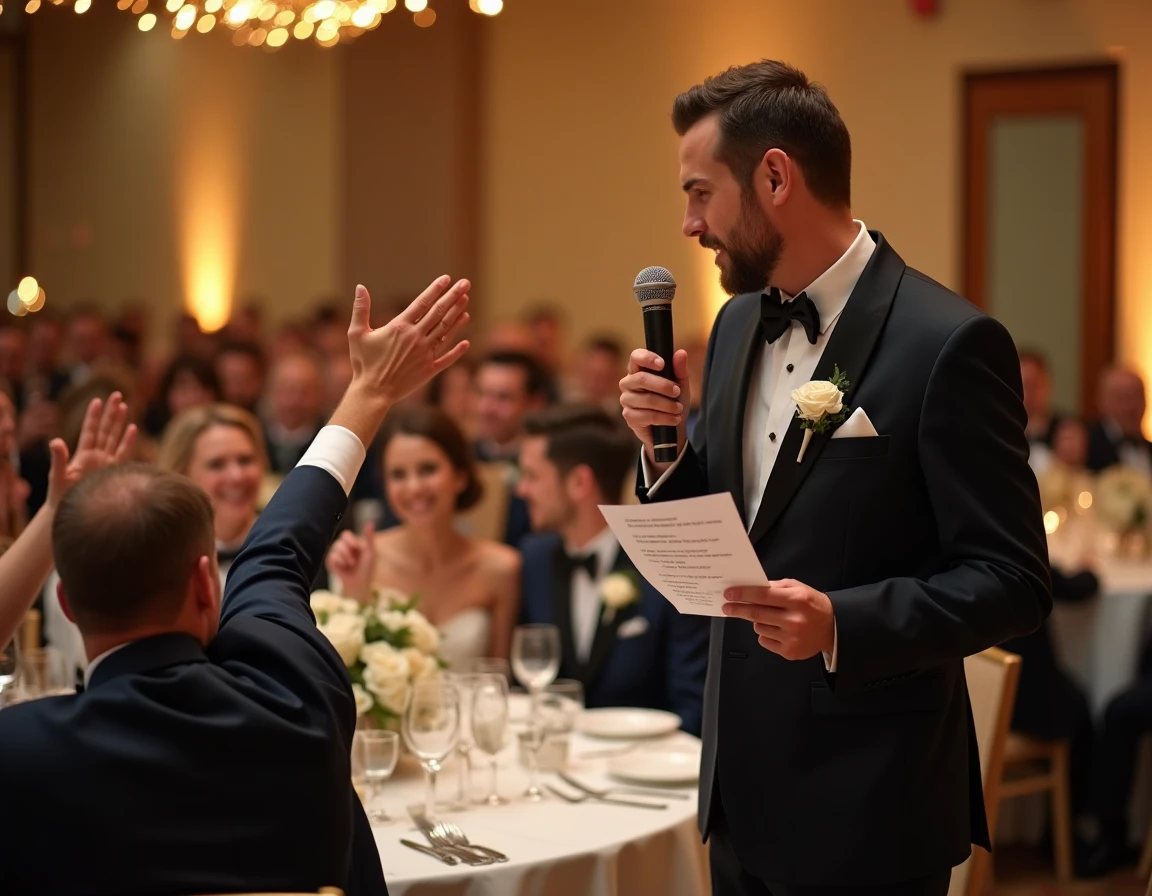
Statements about the couple are read aloud, filled with puns and double meanings. Guests raise a “true” or “false” card.
The interest lies in crafting the questions. A good pun slipped into the statement makes the answer secondary: it’s the laughter that counts. The quality of the questions makes all the difference between a flat quiz and a memorable moment.
4. The personalized crossword puzzle
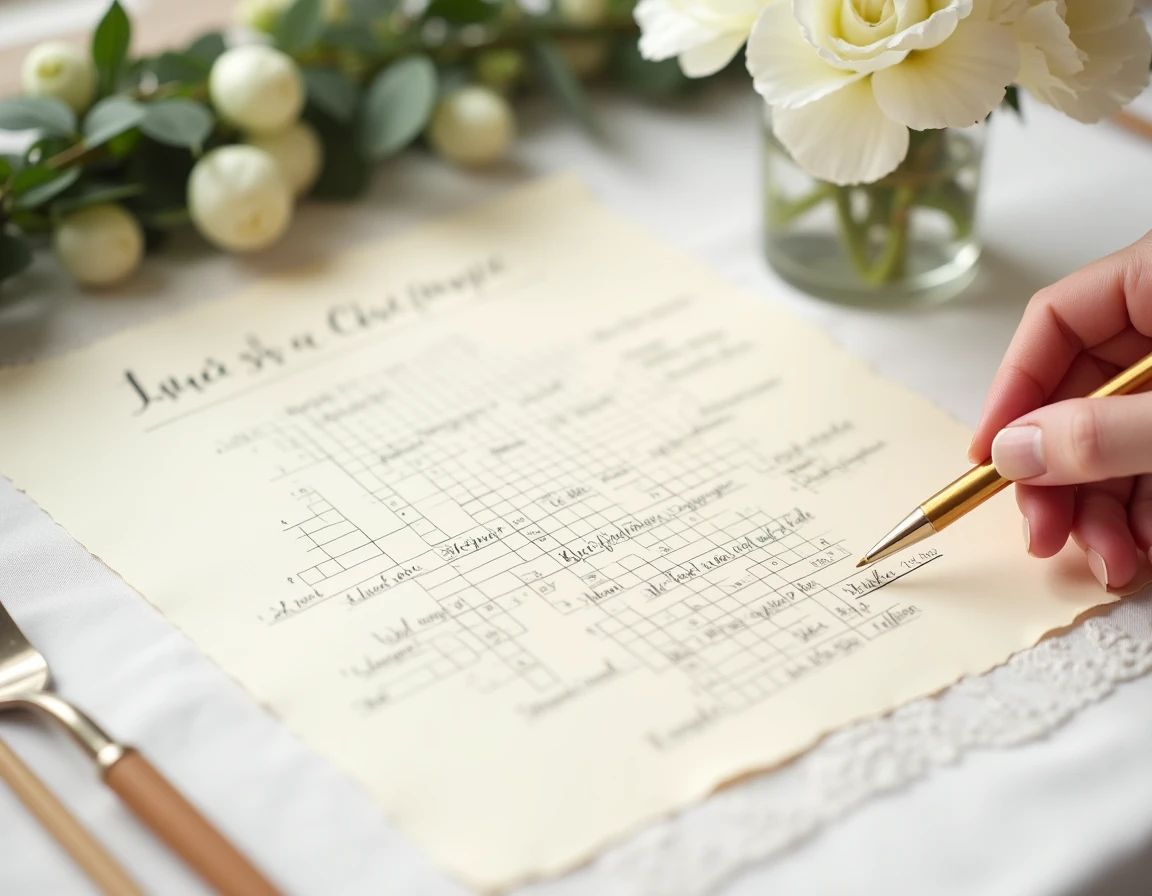
A grid printed on the placemat, with definitions referring to the couple’s history, the names of loved ones, or travel anecdotes. Each definition plays on double meanings.
This game requires no oral facilitation. It keeps guests occupied between courses without disrupting service. Planning about ten words is enough for a readable grid that won’t discourage anyone.
5. The speech bingo
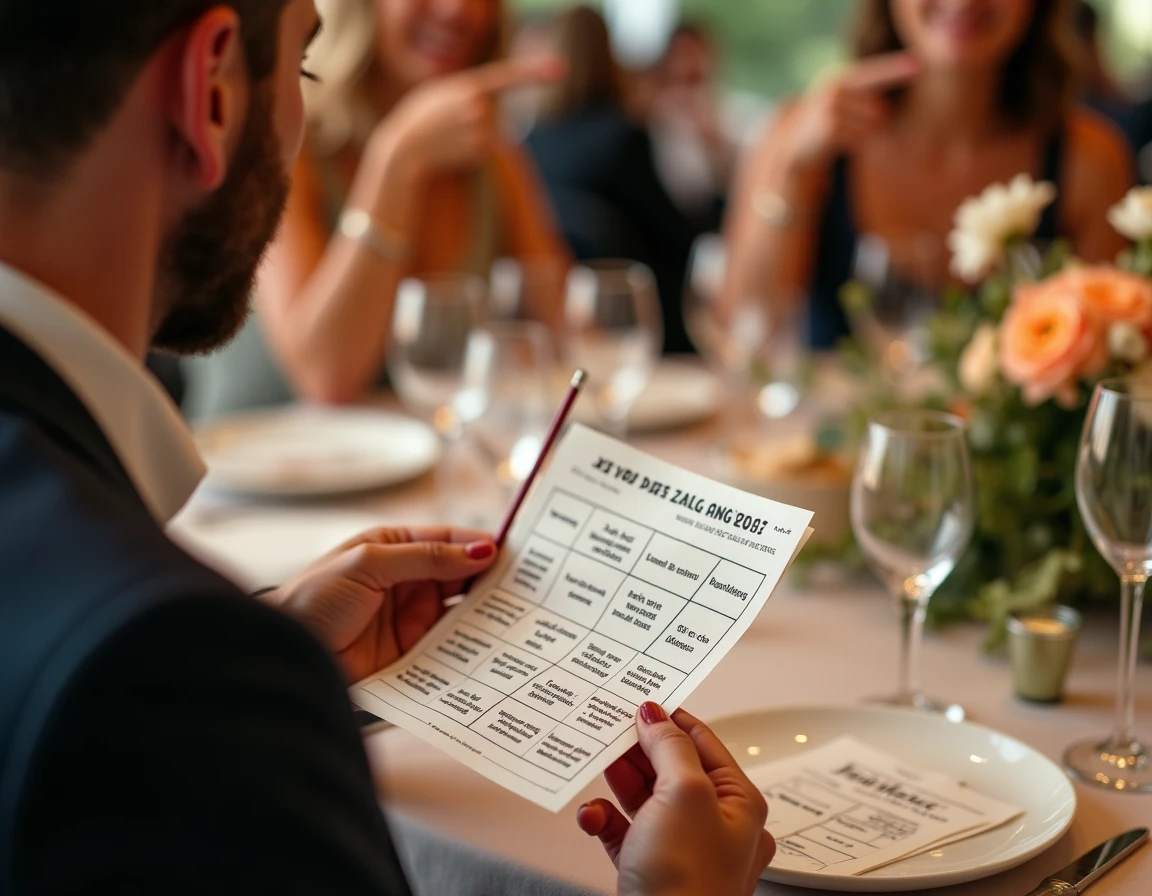
Each guest receives a bingo card with words or phrases likely to appear in the speeches of the witnesses: “emotion,” “always,” “best friend,” “teary-eyed.” The first to complete a line discreetly raises their hand.
The speech bingo transforms a sometimes lengthy moment into a game of active listening. Guests pay close attention to every word, which has the advantage of valuing the speakers.
6. The anagram riddle
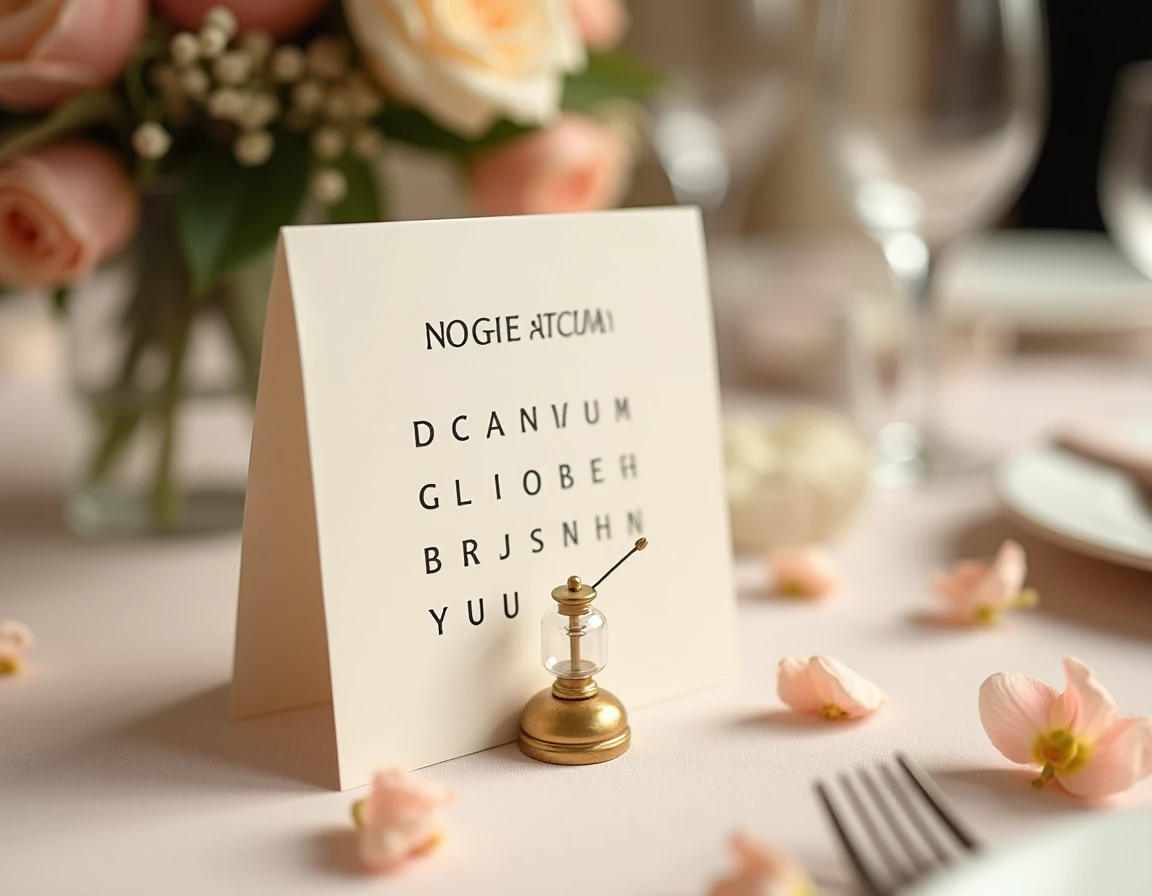
The names of the newlyweds, the ceremony location, or the honeymoon destination are scrambled into anagrams. Guests must reconstruct the correct words.
This pure verbal game is particularly suited for tables of close friends who know the couple well. For mixed tables, add a hint under each anagram.
7. The forbidden word game during the meal
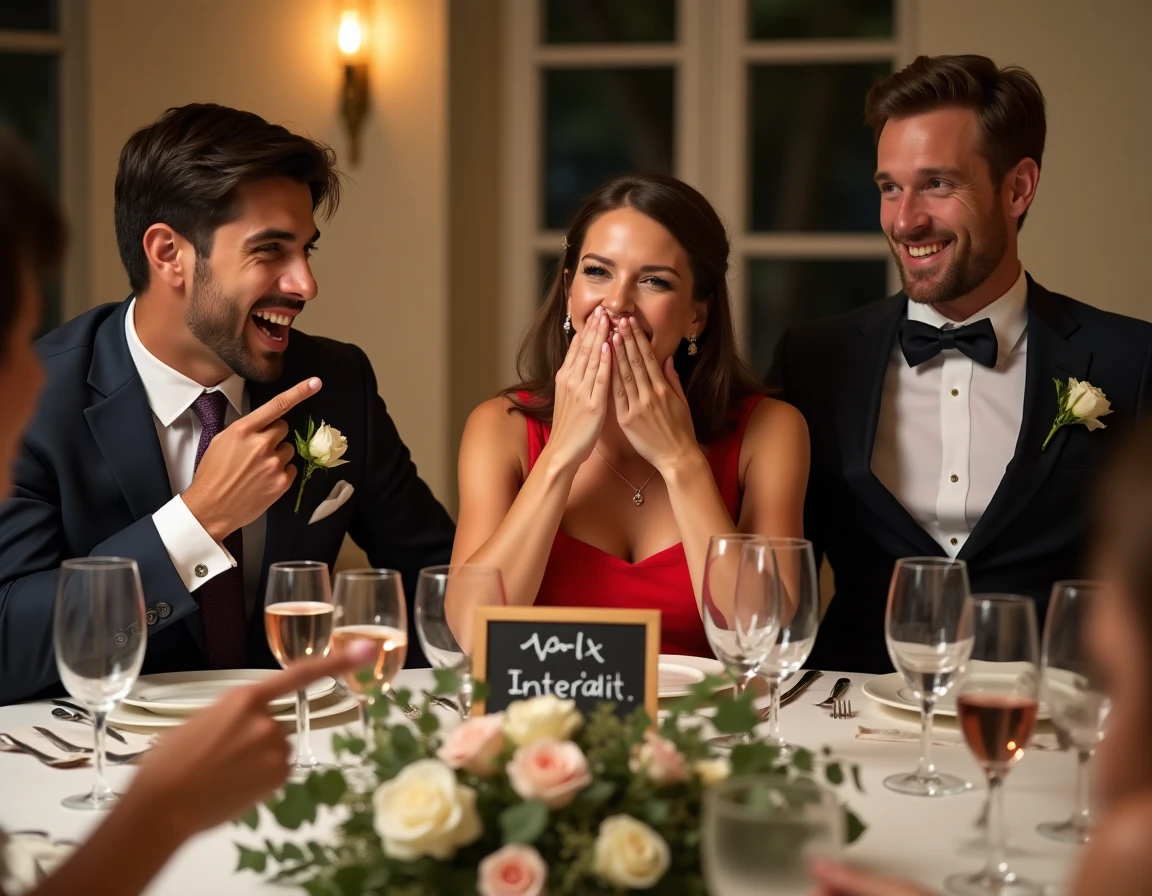
Each table receives a list of banned words for the duration of the meal: “wedding,” “dress,” “cake,” “kiss.” Anyone who utters a forbidden word loses a token. The table with the most remaining tokens wins.
The forbidden word creates a comedic tension that lasts throughout the meal, unlike one-off games. It forces guests to rephrase, generating absurd turns of phrase.
8. Themed charades read by the DJ
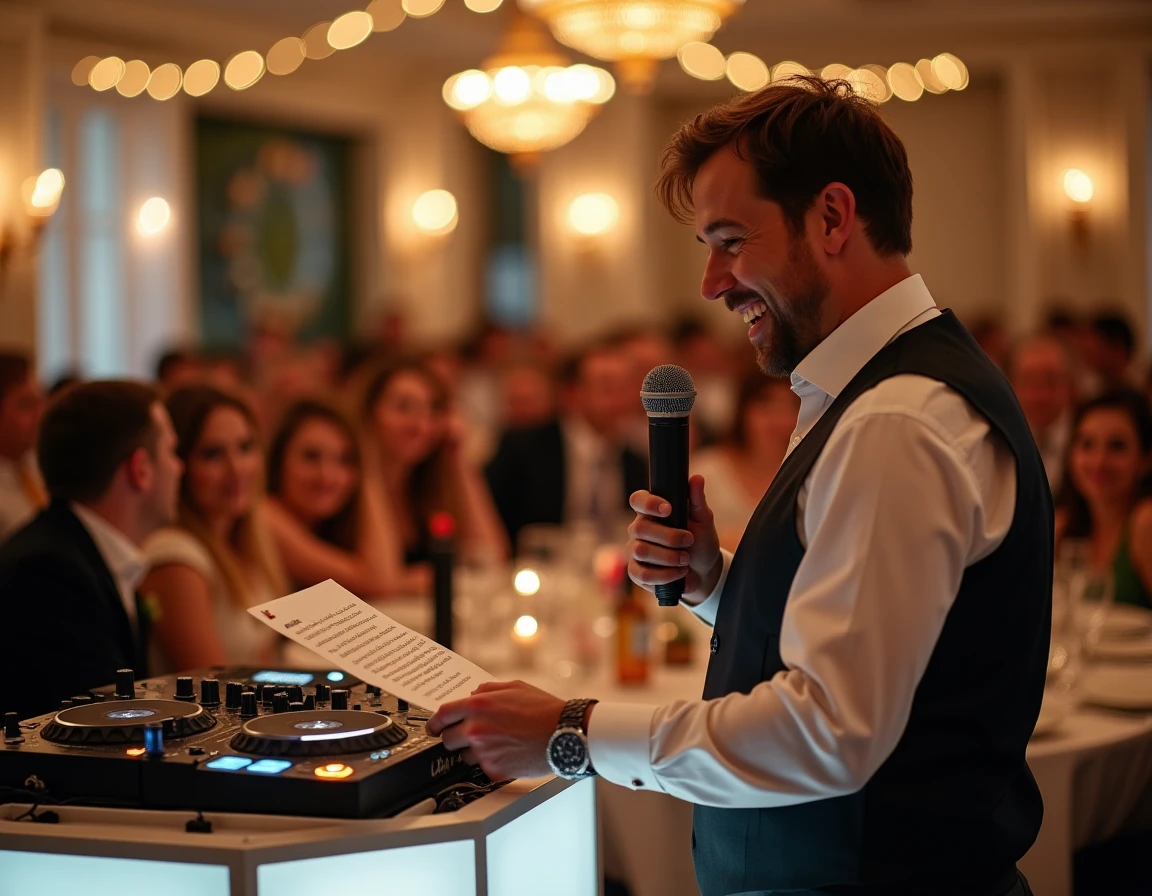
The DJ or master of ceremonies reads charades whose solution is related to wedding vocabulary. “My first is a pronoun, my second is a musical note, my whole unites lovers” (ma-ri-age).
Spacing the charades between two music tracks keeps attention without breaking the rhythm of the dance party.
9. The dialogue bubble photobooth
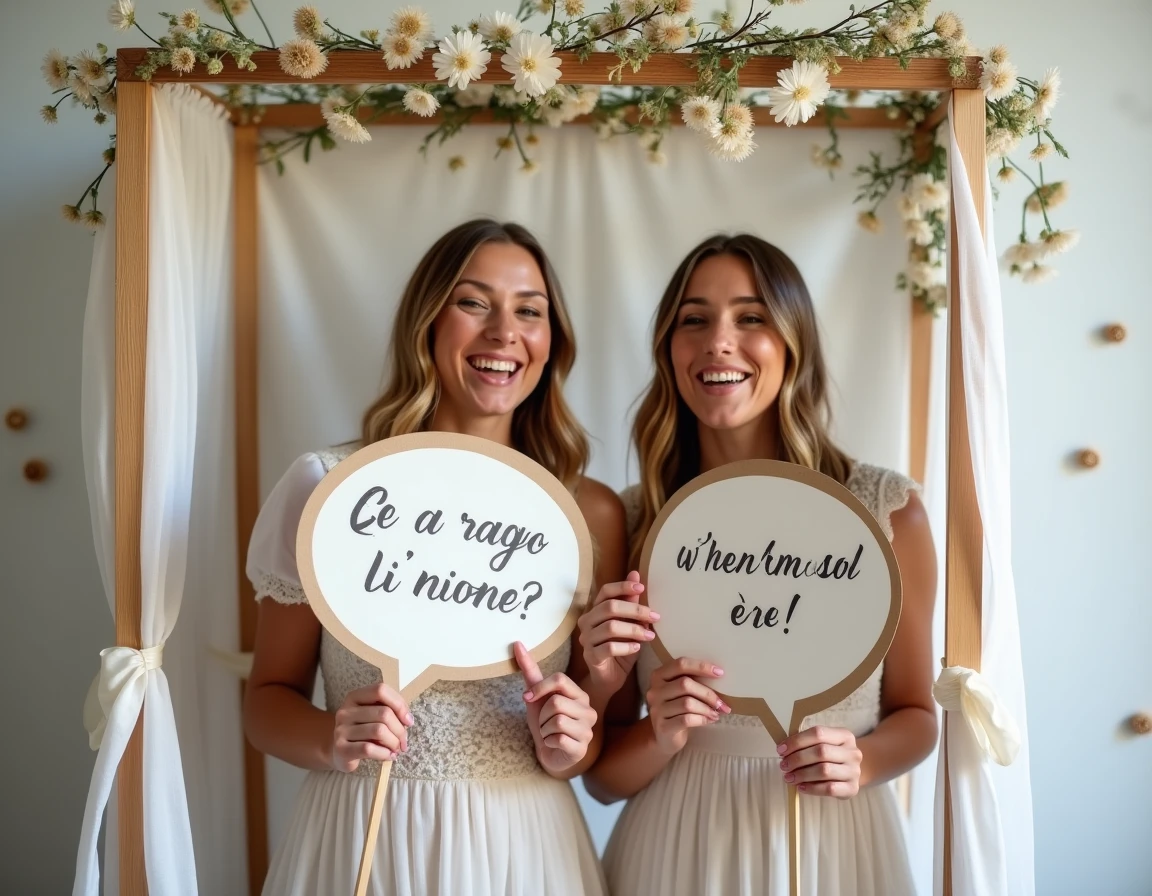
Signs shaped like comic book bubbles feature double meanings or wedding puns. Guests pose with the bubble of their choice in front of the camera.
This hybrid format combines wordplay and visual memory. The photos then circulate on social media, extending the entertainment long after the evening. The funniest bubbles are those written by the guests themselves on blank signs.
10. The blind test of romantic movie quotes
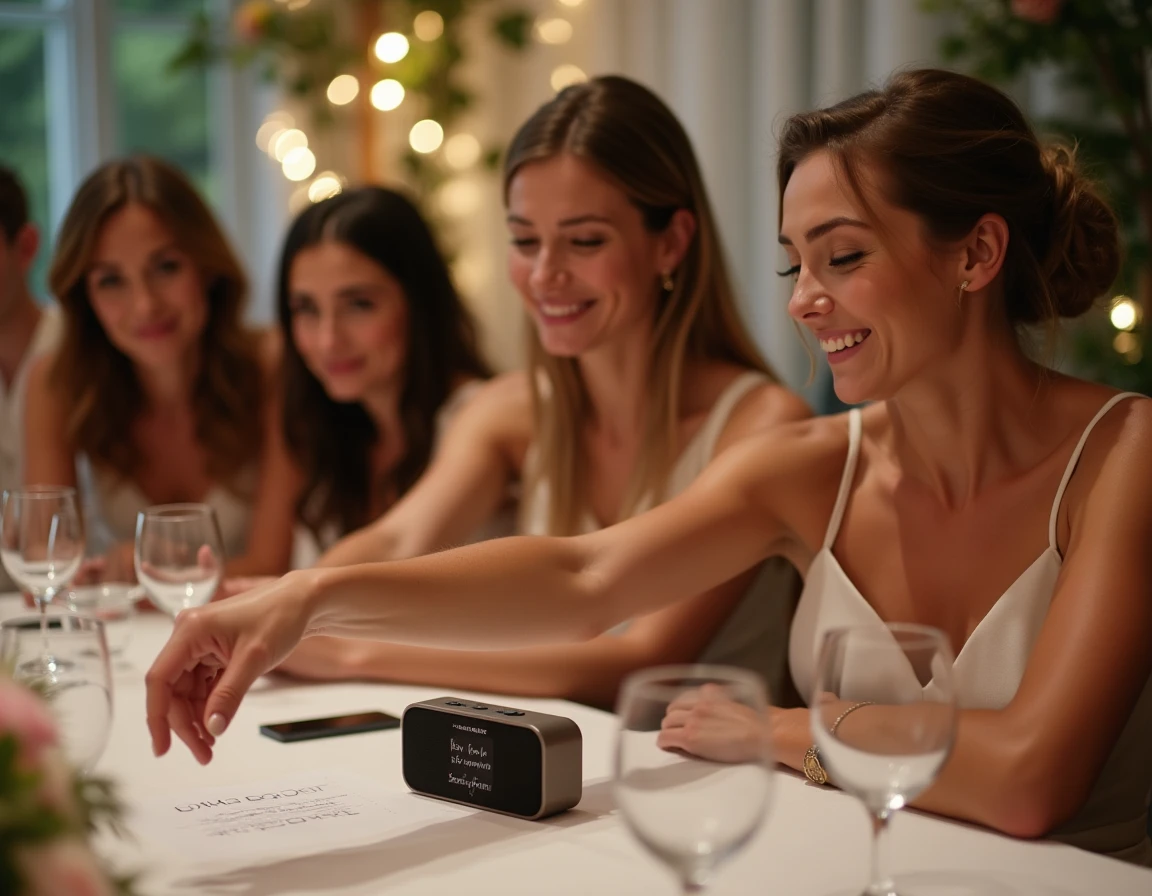
Instead of a classic musical blind test, read iconic quotes from romantic films with one word replaced by a pun. Guests must identify the original film and the modified word.
This format appeals to movie buffs while remaining accessible to others thanks to the audio or visual hint projected simultaneously.
11. The giant hangman on a blackboard
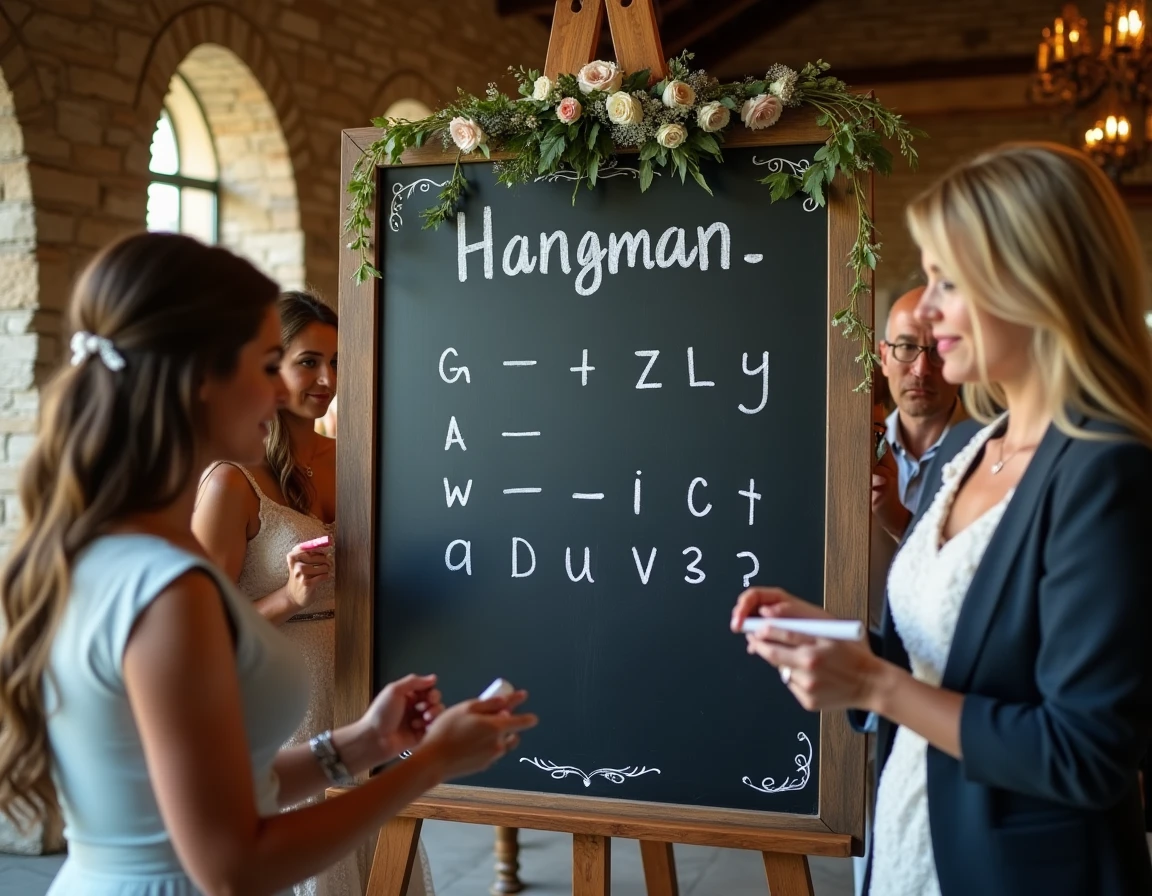
A blackboard set up near the bar displays a hangman whose solution is a word or phrase related to the couple. Guests suggest letters as they pass by, at their own pace.
The giant hangman runs continuously, without dedicated facilitation. It naturally attracts the curious and generates spontaneous gatherings around the bar.
12. The crossword booklet in the menu
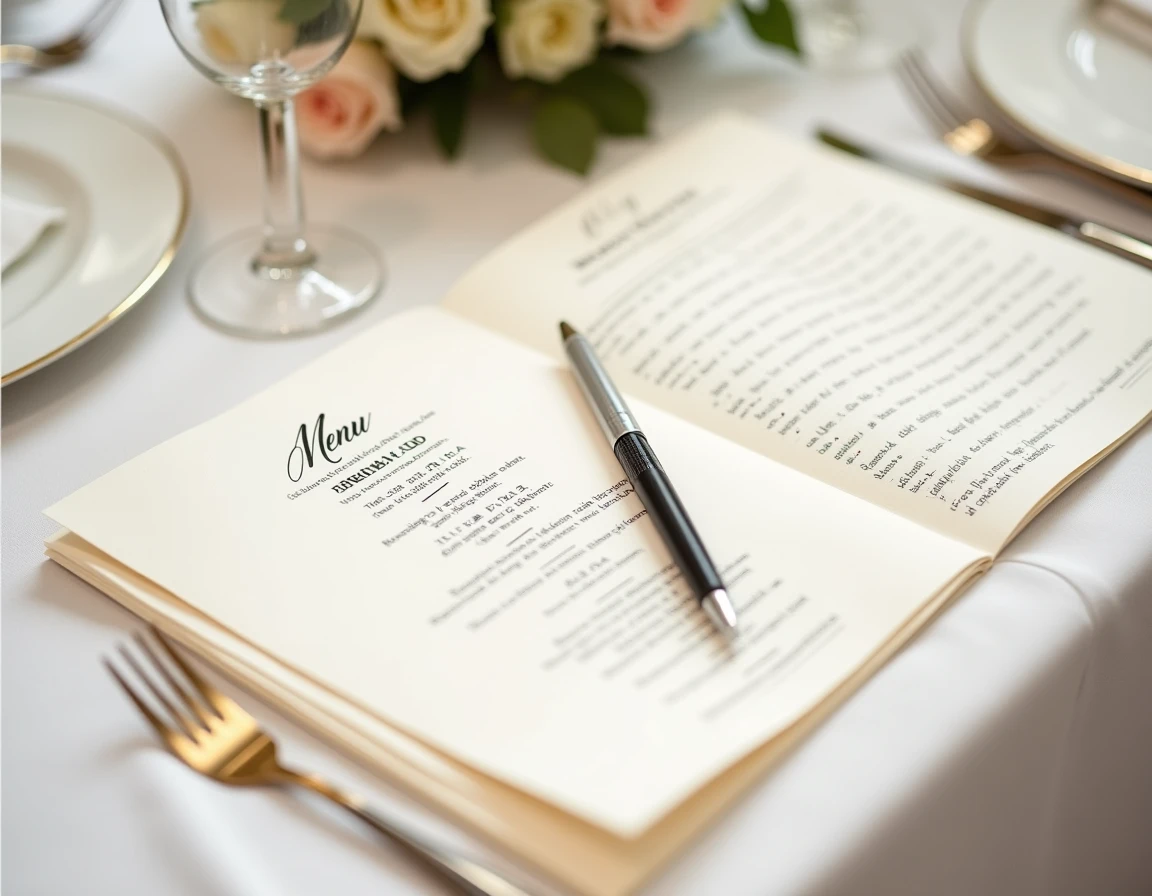
The wedding menu includes a page of crosswords with definitions playing on romantic vocabulary. This discreet format avoids the need for a facilitator and allows each guest to play at their own pace.
Sliding the crosswords onto the last page of the menu makes them accessible without imposing the activity on those who prefer to simply chat.
13. The invented definitions game
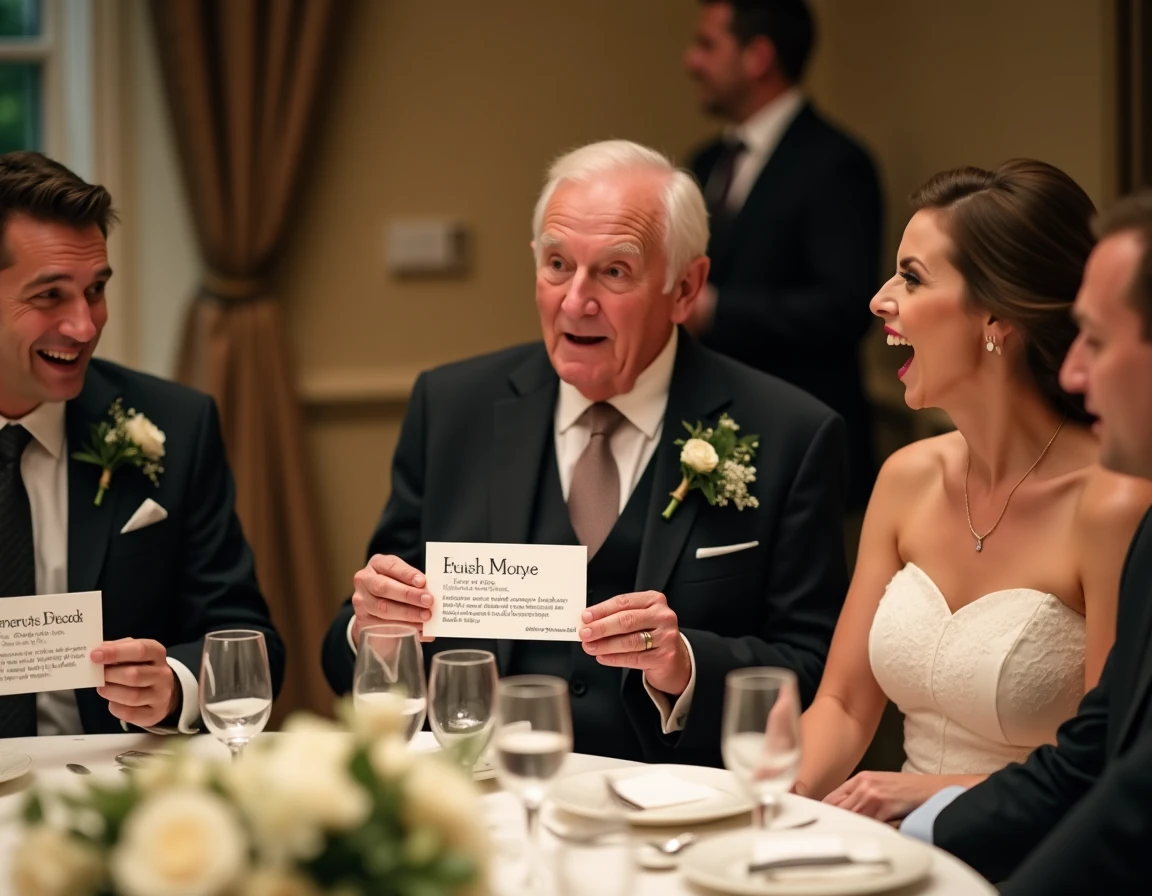
Each table invents a humorous definition for a real word related to marriage. A leader then reads all the definitions mixed with the real one. Other tables vote for the one they think is correct.
This game, inspired by the principle of the Fictionnaire, rewards verbal creativity. The most absurd definitions are often the most voted.
14. The coded message in the guestbook
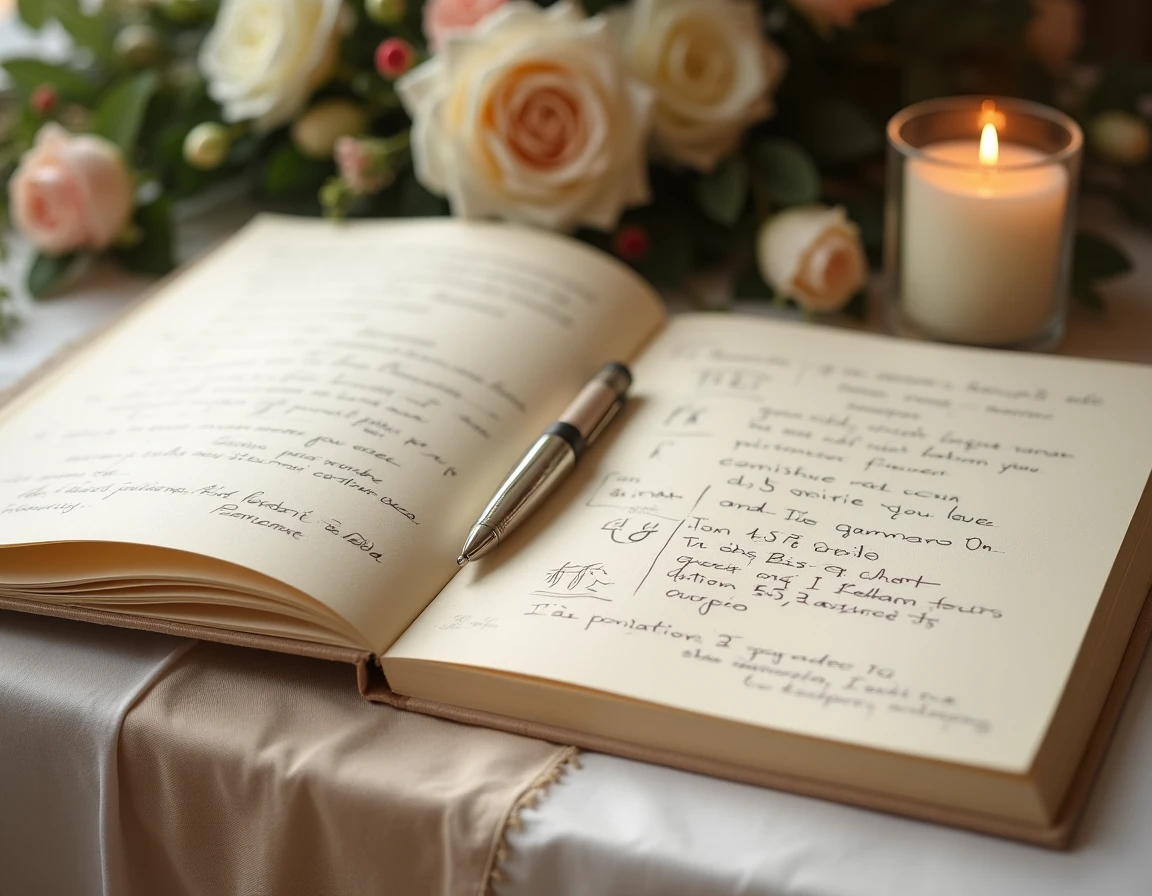
Each guest receives a secret instruction: to integrate a required word into their guestbook message. The newlyweds then discover the hidden phrase by collecting all the required words in the order of the pages.
The coded message transforms the guestbook into a literary treasure hunt. It also gives the newlyweds a reason to reread each page carefully after the celebration.
15. The pun contest at the open mic
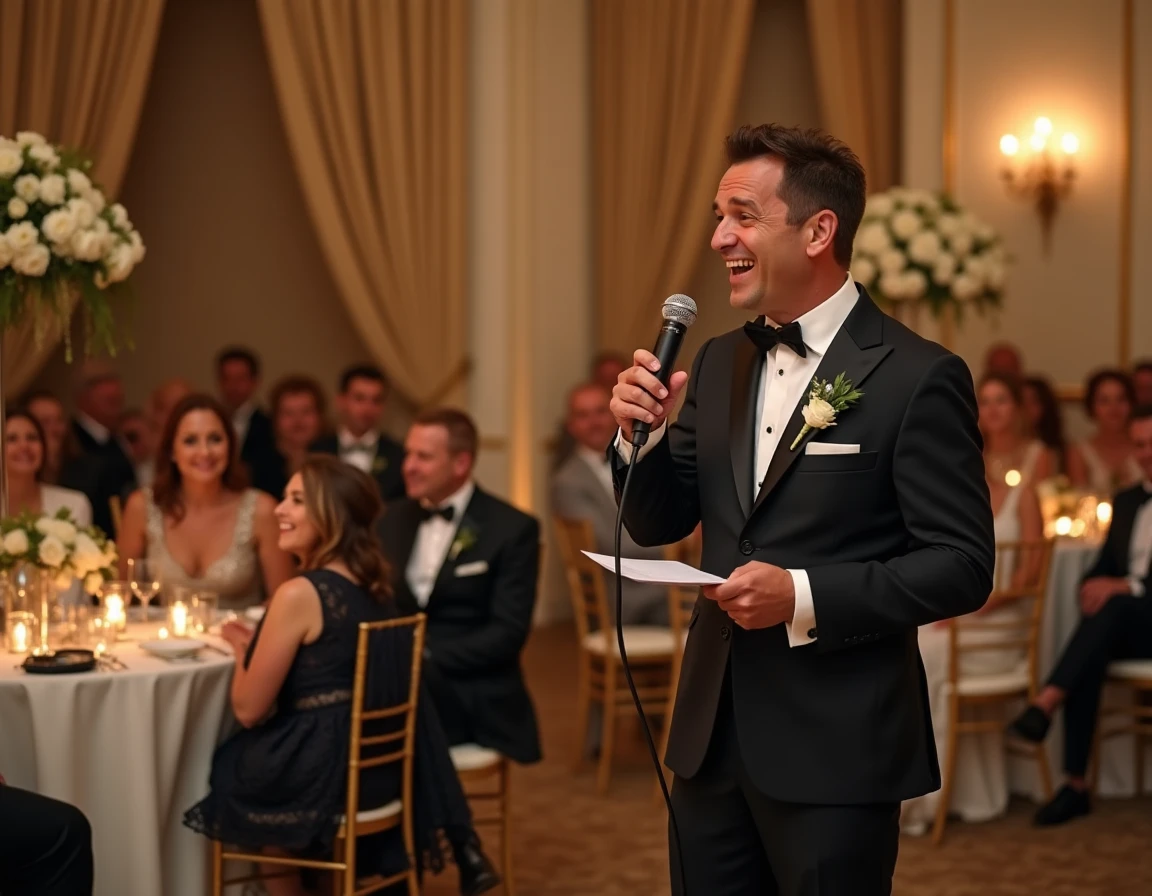
An open mic slot is announced at the end of the evening: each volunteer has thirty seconds to deliver the best pun on the theme of marriage. A jury of witnesses rates the originality and the laughter of the audience.
Reserving this game for the end of the evening takes advantage of the relaxed atmosphere. Shy guests will have had time to prepare their lines, and the more spontaneous ones will fuel the laughter.
The common thread of these fifteen formats remains the same: a successful word game at a wedding relies on knowing the audience. Adapting the difficulty, varying the activation moments, and leaving free spaces between activities prevents saturation. It’s better to have three well-placed games during the evening than ten consecutive activities that exhaust the guests’ attention.