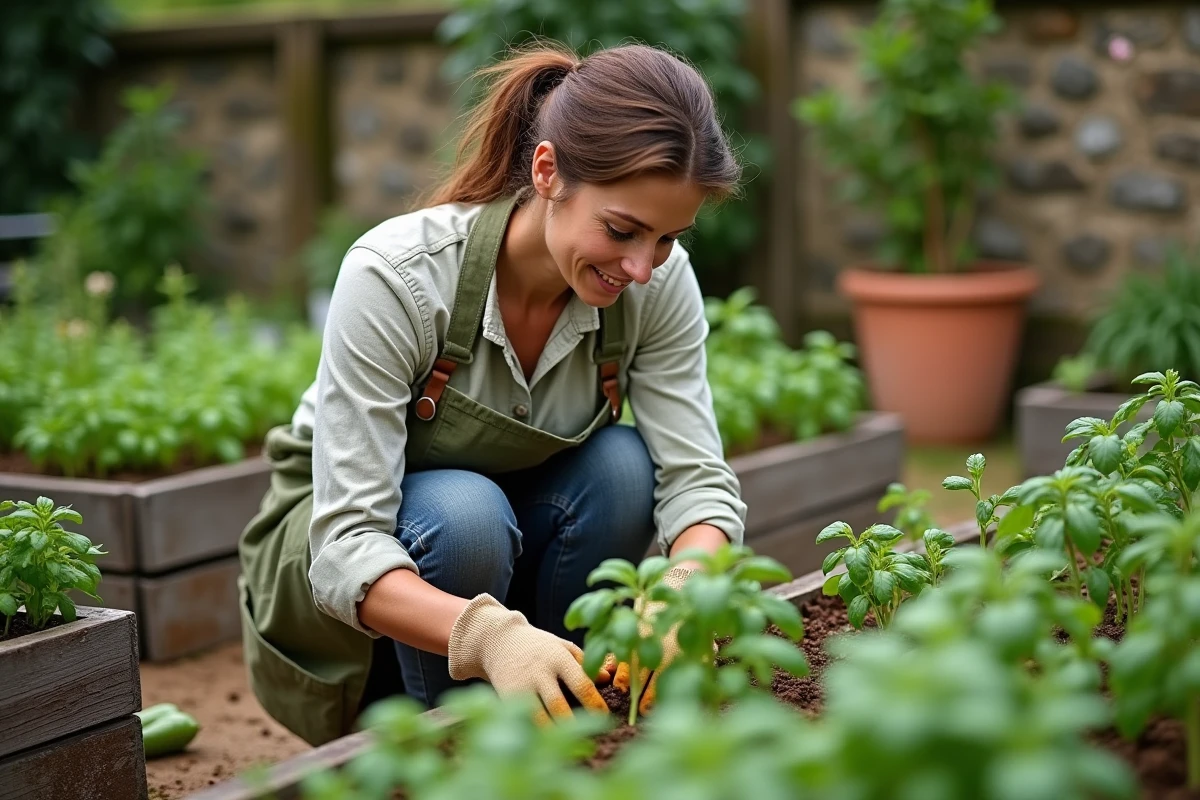
An organic vegetable garden is based on a simple principle: nourish the soil so that the soil nourishes the plants. This circular logic distinguishes organic farming from conventional approaches, where soil deficiencies are compensated for with chemical inputs. Understanding this functioning before sowing the first seed avoids most common failures in the garden.
Water stress in the organic garden: adapting crops to water restrictions
Drought orders are multiplying every summer in France. The Ministry of Ecological Transition has been publishing a national map (Propluvia) since 2022 showing a clear increase in departments subject to restrictions, with bans on watering during hot hours and limitations on the use of drinking water.
Météo-France also documents a rising trend in the frequency and intensity of summer heatwaves, intensified since 2019. For an organic garden, this reality imposes concrete choices right from the planning stage.
- Favor drought-resistant varieties: small-sized tomatoes, Spanish beans, musky squashes, which tolerate water scarcity better than hybrid varieties that are heavy on irrigation
- Shift sowing dates to avoid having the critical growth phase during peak heat, by sowing certain fruiting vegetables as early as March under cover rather than in May in open ground
- Install temporary shading (woven fabrics, light hedges of sunflowers or corn) to reduce evapotranspiration on the most exposed beds
- Use thick mulch, at least several centimeters of dry organic matter, to retain soil moisture between allowed waterings
A garden designed to withstand water restrictions produces as well as a garden with unlimited irrigation, provided the right species are chosen and soil coverage is managed. Le Jardineur details several cultivation approaches adapted to these climatic constraints.
Soil fertility in organic farming: understanding before amending
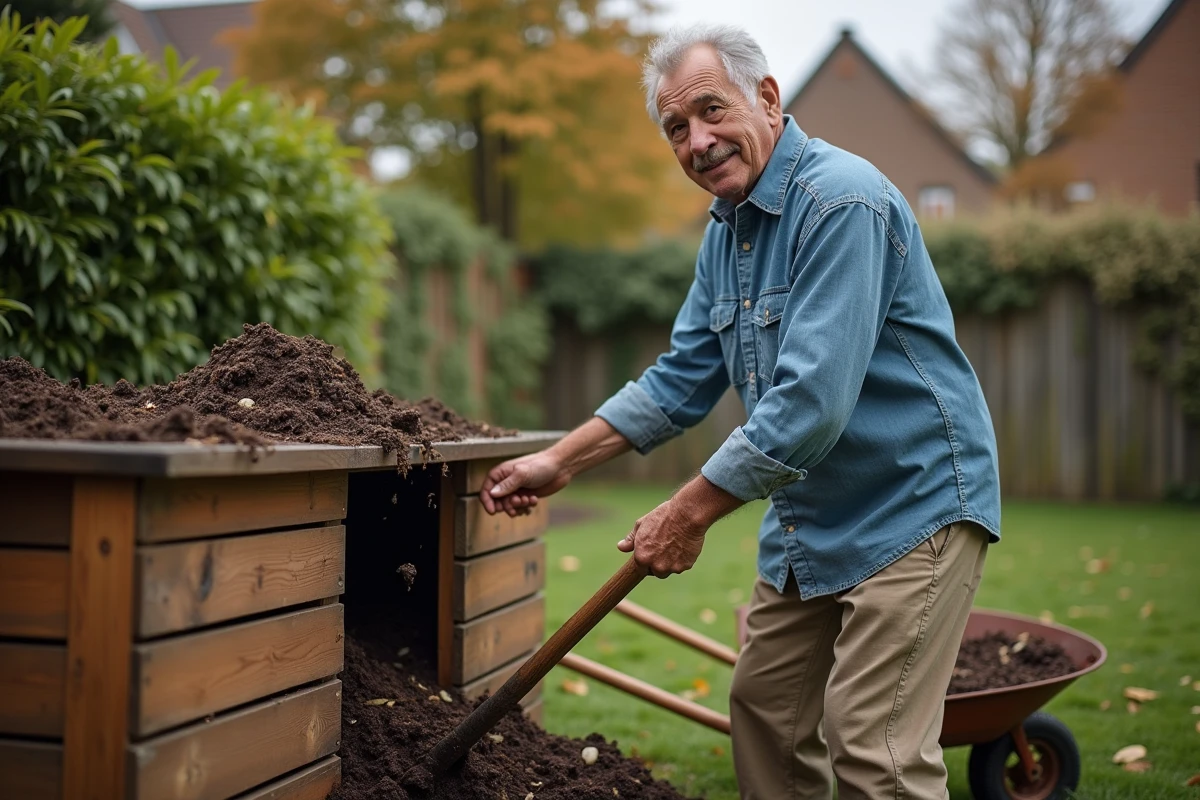
Adding compost without knowing what the soil contains is like cooking without tasting. The first useful step is to observe the earth: its color, texture, and how it absorbs water after rain.
Clay soil retains nutrients well but can easily become waterlogged. Sandy soil drains quickly and loses its inputs through leaching. Compost acts differently depending on soil texture: it lightens clay and adds body to sand. But the necessary amount varies, and an excess of undecomposed organic matter can cause a temporary “nitrogen hunger” that slows the growth of young plants.
The role of mulching in the biological life of the soil
Mulching serves not only to retain moisture. It nourishes the soil fauna (earthworms, springtails, decomposer fungi) that transforms organic matter into stable humus. A permanently covered soil develops biological activity far superior to bare soil.
Dried grass clippings, cereal straw, and shredded dead leaves work well. Each type of mulch decomposes at a different rate and releases distinct nutrients. Alternating mulch sources throughout the seasons creates a more balanced soil than a repeated single input.
Plant associations and beneficial biodiversity in the garden
Placing a basil plant next to tomatoes is not magical. Plant associations work for specific reasons: some species attract pollinating insects, others repel pests through their volatile compounds, and still others fix atmospheric nitrogen in the soil thanks to symbiotic bacteria.
Legumes (beans, peas, clover) capture nitrogen from the air and store it in root nodules. When grown before or alongside nitrogen-hungry vegetables (cabbages, leeks), they reduce the need for organic fertilizers. This biological mechanism effectively replaces an external nitrogen input.
Attracting beneficials with flowers and habitats
Participatory science programs like Spipoll (Photographic Monitoring of Pollinating Insects) show that the diversity of beneficial insects directly depends on the floral diversity present. A garden bordered with marigolds, phacelia, and cosmos attracts hoverflies whose larvae consume aphids in large quantities.
Leaving an unmown area at the edge of the garden creates a winter refuge for ladybugs, lacewings, and ground beetles. These natural predators regulate pest populations as early as spring, before damage becomes visible on crops.
Crop rotation in organic gardening: avoiding soil depletion
Planting tomatoes in the same spot every year depletes the soil of specific elements and encourages the accumulation of pathogens (downy mildew, verticillium wilt). Rotation involves changing the location of each botanical family from year to year, following a cycle of at least three years.
The principle is based on the fact that each family of vegetables extracts and returns different elements. Nightshades (tomatoes, peppers, eggplants) consume a lot of potassium. Crucifers (cabbages, radishes, turnips) draw more sulfur and boron. Alternating families prevents the soil from specializing and depleting.
In practice, dividing the garden into three or four zones and rotating the groups each season is sufficient. A cultivation notebook to record locations year after year prevents forgetfulness and allows for identifying plots that yield better results depending on the cultivated families.
The success of an organic garden relies less on the cultivated area than on understanding these mechanisms. A living soil, plants adapted to the local climate, and well-thought-out rotation reduce maintenance work while increasing the consistency of harvests season after season.