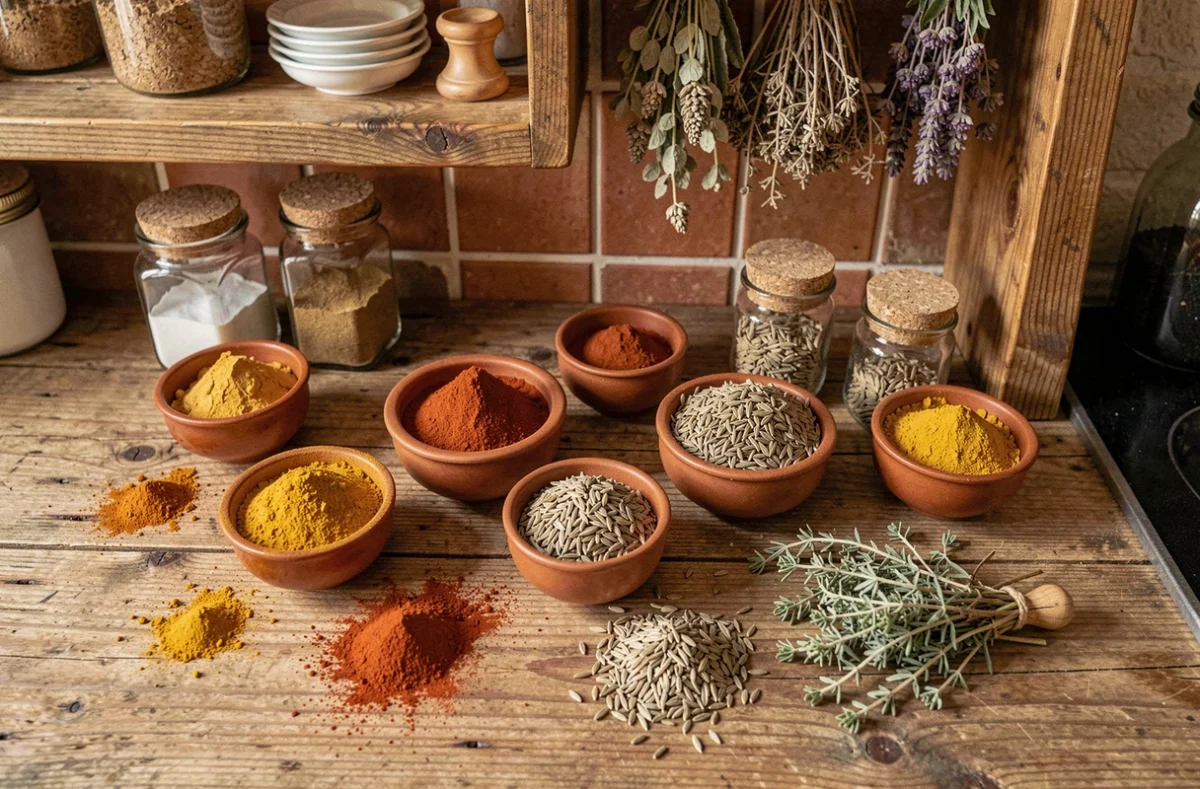
A bland zucchini gratin, unremarkable roasted carrots, a sauté of vegetables that appeals to no one: the problem rarely lies with the vegetable itself. Seasoning can elevate a dish from acceptable to memorable. A few well-chosen spices are enough to transform your homemade vegetables and gratins, provided you understand how each one affects the flavors.
Toasting spices before cooking: the gesture that changes everything
Have you ever noticed that raw cumin sprinkled on a gratin does not deliver the same taste as when it is heated for a few seconds in a dry pan? Toasting releases the volatile oils contained in the spice. These aromatic compounds, trapped in the seed or powder, disperse much better after a quick dry heat over medium flame.
This gesture is particularly relevant for vegetarian dishes, where the absence of meat juices leaves less fat to carry the aromas. Toasting your spices compensates for this lack of flavor base. Coriander seeds, cumin, ground paprika: thirty seconds in a hot pan, without oil, until a clear fragrance emerges. Remove immediately to avoid bitterness.
As the advice from the site Mon Blog Cuisine reminds us, combining this technique with a good choice of spices allows you to get the best out of each vegetable without masking its own flavor.
Turmeric, cumin, and coriander: the trio for root vegetables and gratins

Root vegetables (carrots, sweet potatoes, parsnips, potatoes) share a natural sweetness. They call for spices that bring depth without overpowering that sweet aspect.
- Turmeric gives a golden color and a slight bitterness that contrasts with the sweetness of the vegetable. Half a teaspoon is enough for a gratin serving four people. Mix it with a fat (olive oil, cream) to ensure it disperses properly.
- Cumin adds a warm, almost earthy note. It pairs well with potatoes and squashes. Toasted, it becomes rounder and less harsh.
- Ground coriander offers a lemony freshness that lightens creamy dishes. In a gratin dauphinois or a sweet potato gratin with coconut milk, it prevents heaviness.
This trio works together or separately. The idea is to combine a base spice (turmeric or cumin) with a brighter note (coriander) to create relief on the plate.
Paprika and pepper in a gratin: dosage and timing of addition
Paprika is often cited as a universal spice for gratins. This is true, but with one condition: choosing between sweet paprika and smoked paprika radically changes the result. Sweet paprika brings a sweet warmth, ideal for summer vegetables (zucchini, eggplant, peppers). Smoked paprika gives a braised quality that suits autumn gratins, with mushrooms or cauliflower.
Pepper, on the other hand, deserves to be added at the end of cooking. A gratin cooked for a long time in the oven loses some of the volatile aromas of pepper. It’s better to give it a turn of the mill right out of the oven, directly on the golden crust, to preserve its liveliness.
For paprika, the timing of incorporation also matters. Integrate it into the sauce (béchamel, cream, tomato purée) before baking. It needs moist heat to release its color and flavor. Sprinkled on top raw, it browns without really flavoring.
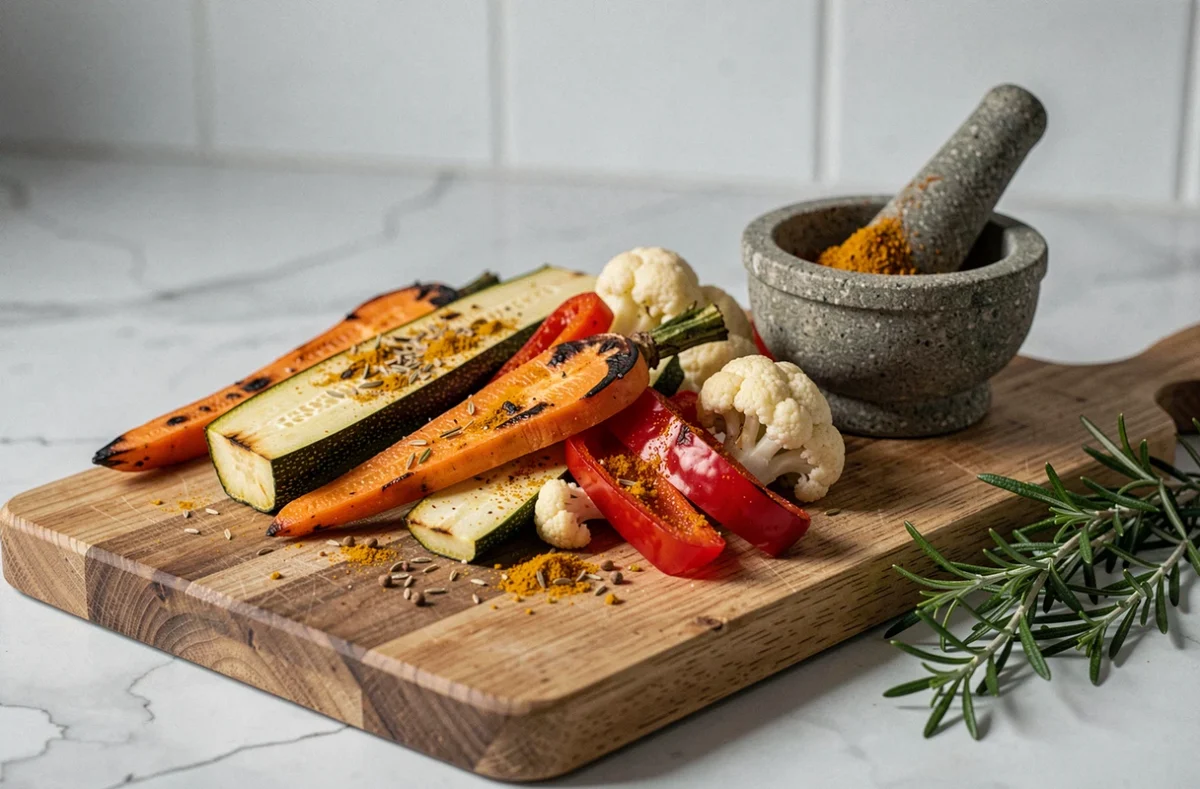
Spice blends for vegetables: what the label doesn’t always say
Pre-made blends (like “special for vegetables,” curry, ras el hanout) are convenient. They offer a pre-calibrated balance. However, their composition deserves a careful look.
The INCO regulation requires that the list of ingredients appears in descending order of weight, with allergens highlighted. Some blends contain celery, mustard, or traces of nuts, which is rarely mentioned on culinary blogs. If you are cooking for allergic guests, always check the label, even on a product you buy regularly: the recipes for blends can sometimes change from batch to batch.
A store-bought curry, for example, may contain fenugreek, turmeric, coriander, cumin, pepper, and chili, but also a significant amount of salt. If you season your gratin separately, the result will be too salty. Tasting the sauce before baking avoids unpleasant surprises.
Herbs and spices: knowing how to combine them in the same dish
Thyme, oregano, and basil are not spices in the strict sense, but aromatic herbs. This distinction is important in cooking: herbs bring vegetal freshness, while spices provide warmth and depth. The two complement each other.
A summer vegetable gratin benefits from dried thyme in the sauce and sweet paprika for color. A sauté of root vegetables can combine toasted cumin and a drizzle of fresh coriander at the end of cooking. The idea is not to multiply flavors but to play on two distinct registers: one spice for the base, one herb for the finish.
Avoid adding more than two or three strong seasonings in the same dish. An overloaded gratin loses its flavor clarity. The vegetable must remain identifiable beneath the aromas.
Cinnamon, often associated with desserts, also works in squash or sweet potato gratins, in very small doses. A pinch of cinnamon in a béchamel intended for a pumpkin gratin creates a subtle autumn note, provided it does not exceed a pinch for four people.
The choice of a spice is not limited to a fixed list. Each vegetable, each cooking method, and each sauce calls for an appropriate seasoning. Start by mastering two or three simple pairings (turmeric-carrot, smoked paprika-cauliflower, cumin-potato), then adjust the dosages to your taste. It is the consistency of the gesture, not the quantity of spices in the cupboard, that advances a dish.