In France, the proportion of the population aged over 65 continues to grow, and prevention policies struggle to meet all real needs. Between official recommendations on physical activity, nutrition, or vaccination, and what seniors actually implement, the gap remains significant. Preserving the health and fitness of seniors requires identifying the concrete obstacles that hinder the application of these recommendations in daily life.
Sarcopenia and muscle loss in seniors: a signal often ignored
The gradual loss of muscle mass, known as sarcopenia, can occur without the person losing weight. The body changes silently, and this phenomenon is largely underestimated in routine medical follow-up.
A noticeable slowdown in walking or a new difficulty in getting up from a chair are signs to report to the doctor. A protein-rich diet combined with appropriate strength exercises is the reference approach. The HCSP emphasizes the importance of regular exercises, particularly those that engage the lower limbs.
The problem is that spotting these signs requires an external perspective. A person living alone does not always notice that it takes them longer to climb stairs. Relatives or caregivers play a vigilant role here that institutional prevention measures cannot replace. The resources available on the Santé et Forme website for seniors help identify concrete benchmarks to track the evolution of physical condition over the months.
Vaccination for seniors: a blind spot in daily prevention
Prevention is not limited to exercising and eating well. Vaccination status is part of the health habits to integrate, just like physical activity or nutrition.
Current recommendations cover flu and Covid-19 boosters for those over 65. The vaccination status should be reviewed annually with a healthcare professional, whether it is the primary care physician or the pharmacist. The existence of a recommendation does not guarantee that the person is effectively protected: oversights, delays, and changes in vaccination schedules can easily go unnoticed.
For isolated seniors or those with reduced mobility, access to vaccination poses a practical problem. Going to the pharmacy or medical office is not trivial when one no longer drives or when the nearest office is several kilometers away. This logistical reality transforms a simple preventive action into an obstacle course.
Fall prevention: when housing and lack of assistance weigh more than exercise
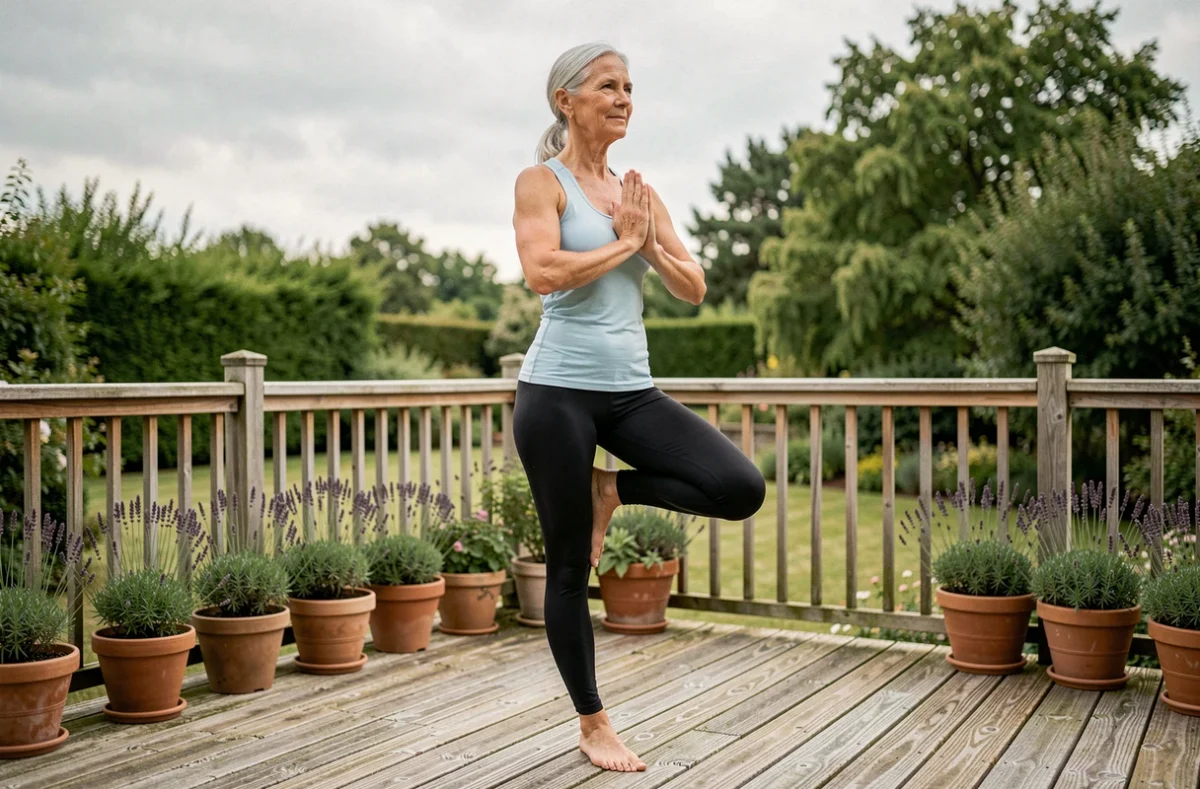
Falls are among the most common accidents in daily life for those over 65. The usual response is to recommend balance and muscle-strengthening exercises. This is necessary but insufficient if the real living conditions are ignored.
Unmet assistance needs at home increase the risk of falling as much as a lack of physical activity. A poorly secured rug, insufficient lighting in the hallway, the absence of grab bars in the bathroom: these factors relate to housing design, not individual will.
The most at-risk situations combine several vulnerabilities:
- Living alone without regular visits from a caregiver or professional, which delays the detection of a balance problem or loss of strength
- Not having a housing assessment by an occupational therapist, while simple adaptations (grab bars, removal of door thresholds) significantly reduce risks
- Giving up going out for fear of falling, which accelerates the loss of autonomy by reducing daily physical activity
Addressing the concrete obstacles of daily life, whether it is missing assistance, housing, or access to care, is as important as individual habits.
Sufficient meals and isolation: the vicious circle of malnutrition in seniors
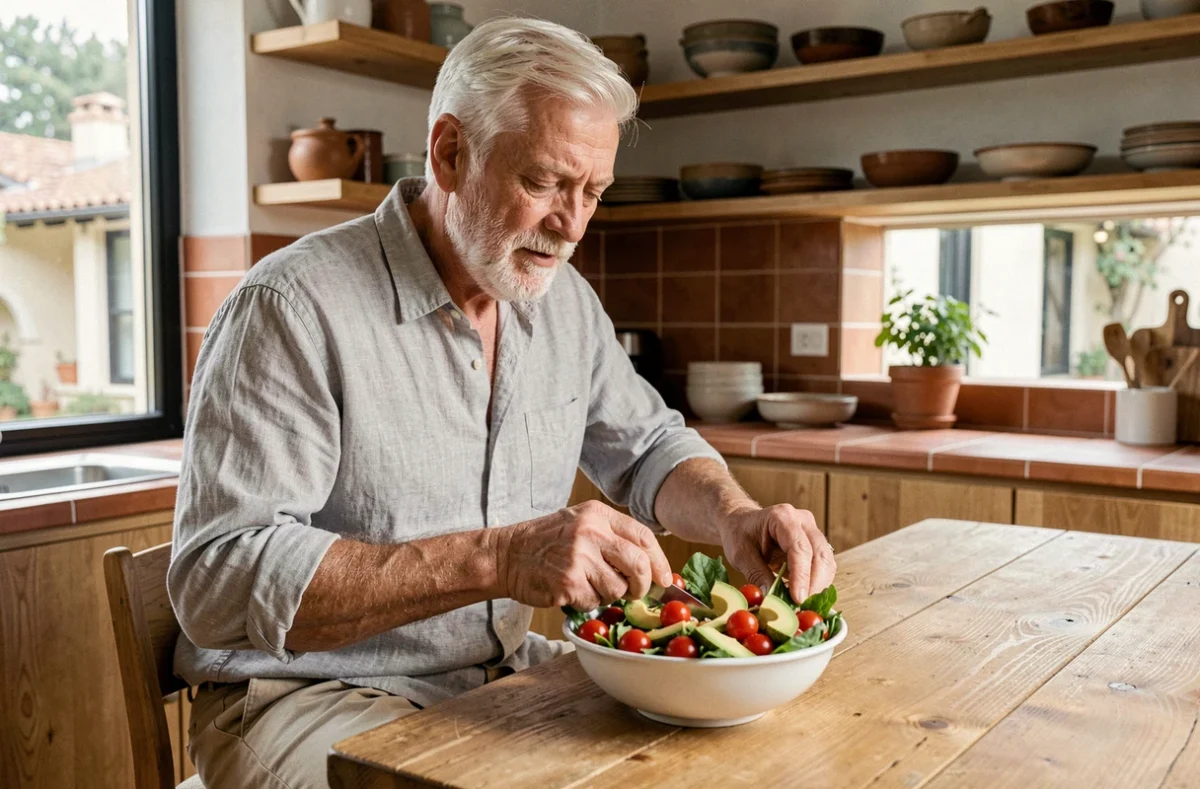
Malnutrition affects a significant portion of elderly people living at home, and the phenomenon worsens with social isolation. Eating alone, day after day, reduces the desire to cook and eat properly. Meals become shorter, less varied, and sometimes skipped.
The feeling of fullness comes faster with age, while the sensation of thirst diminishes. Without social stimulation at mealtime, food intake gradually decreases. Proteins, dairy products, and fruits are the first to disappear from the plate when motivation is lacking.
For caregivers accompanying an elderly loved one, monitoring the contents of the plate and the regularity of meals is one of the most concrete preventive actions. Three meals a day supplemented by snacks (yogurt, fruit, cookie) remain the recommended base, but their implementation often requires external assistance.
What traditional prevention does not cover
Institutional guides list recommendations that assume a stable living environment: an adapted home, a present social circle, smooth access to healthcare professionals. When these conditions are not met, prevention becomes a privilege rather than an actual right.
The challenge for the coming years lies in the ability to remove practical barriers that prevent the implementation of recommendations. A postponed vaccination due to lack of transport, a missed meal due to lack of company, a fall occurring in an unsuitable home: these situations highlight the blind spots of a prevention still too far removed from daily realities.