Finding unique accommodation while traveling is no longer just about browsing the first pages of a comparison site. The range of unusual accommodations, independent guest houses, rehabilitated heritage sites, or distinctive rural formats has significantly expanded in recent years. At the same time, European regulations on short-term rentals have tightened, changing the access conditions to these accommodations for travelers.
Short-term rental regulations: what changes for travelers
Before even looking for an original place, one must consider a constraint that most travel guides do not address: the legality of the accommodation you are booking. Short-term rentals are now subject to increasing restrictions in Europe, with mandatory licenses, limits on the number of nights, quotas by neighborhood, and data transmission obligations to authorities.
In practice, an unusual accommodation listed on a platform is not necessarily compliant. Recent regulations tend to impose requirements on platforms and hosts similar to those in the hotel industry: fire safety equipment, smoke detectors, electrical compliance, liability insurance, proof of legal residential use.
For travelers, the instinct to adopt is simple: check for the presence of a registration number or local authorization on the listing. This is a more reliable indicator than photos or reviews. An accommodation displaying this number has passed an administrative filter, which reduces the risk of last-minute cancellations or insufficient health conditions.
Field reports vary on this point: some travelers report listings without a visible registration number that remain online for months, while others have seen their booking canceled after a municipal inspection. The legal framework is evolving quickly, and platform practices do not always keep pace.
Independent and localized accommodations: where to search beyond major platforms
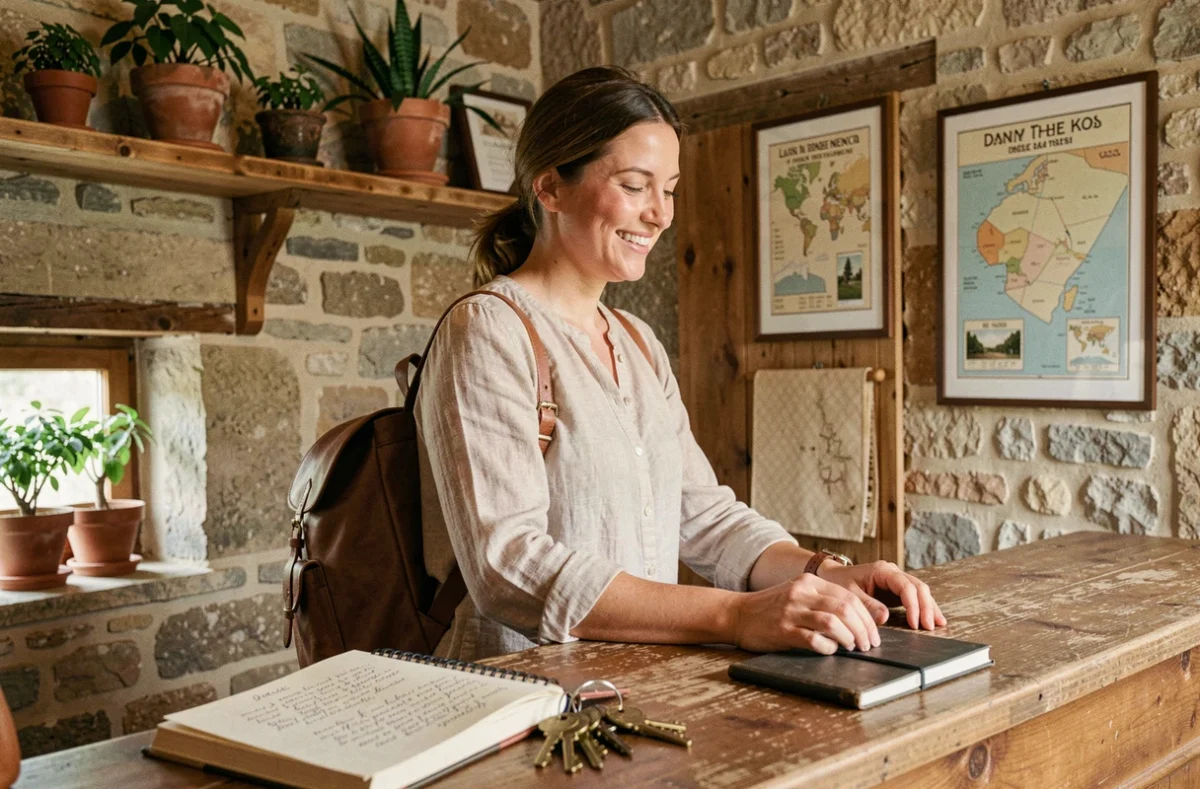
The underlying trend is documented: demand is shifting towards accommodations that offer a local and distinctive experience. Guest houses, rural accommodations, converted heritage buildings—these independent formats attract clientele looking to step outside the standardized circuit. Searching for accommodation on Perles de Voyages allows you to spot these types of properties grouped by destination, without going through the algorithms of major aggregators.
The problem is that unique accommodations are not always available in highly touristic centers. Regulatory constraints (quotas, licenses) and land pressure push these accommodations towards the outskirts or rural areas. This is not a flaw in itself, but it requires adjusting one’s location criteria.
Several concrete avenues deserve exploration:
- Local tourist offices often list certified accommodations that do not appear on major platforms, particularly classified rural gîtes and guest houses.
- Themed accommodation networks (heritage, vineyards, nature) group selected addresses based on quality and authenticity criteria, with regular oversight.
- Specialized sites by country or region offer a more refined inventory than generalist platforms, where unusual accommodations get lost among thousands of standard apartments.
Checking an unusual accommodation: technical criteria not to overlook
A place that is out of the ordinary (cabin, yurt, old farm, houseboat) raises practical questions that traditional accommodations do not. The material guarantees required by recent regulations provide a useful framework for assessing the reliability of a listing.
A reliable unusual accommodation displays its technical compliance: smoke detector, secure access, liability insurance mentioned in the terms. The absence of these mentions in the listing or in exchanges with the host is a warning signal.
Beyond safety, the quality of the experience depends on details rarely visible in photos:
- Sound and thermal insulation, particularly in accommodations in nature or in renovated old buildings.
- Access to running water and sanitation management, which varies greatly from one format to another (some cabins or tiny houses operate with autonomous systems).
- The actual distance to shops, transport, and medical services, often underestimated in descriptions.
Asking these questions directly to the host before booking remains the safest method. Online reviews help, but they reflect very variable expectations from one traveler to another.

Unique accommodation in France and abroad: adapting your search to the local context
Access conditions to unusual accommodation vary greatly depending on the country and region. In France, the market for guest houses and rural gîtes has been structured for a long time, with recognized labels and an established regulatory framework. In other European countries, rules are changing rapidly, and obligations differ from one city to another.
Each destination imposes its own checks. In some cities, short-term tourist rentals are capped at a limited number of nights per year. In others, only primary residences can be rented. These constraints directly influence the availability of original accommodations.
For a stay in a rural area or in a less frequented destination, the offer of independent accommodations is often more accessible and less subject to restrictions. It is in these areas that the most original formats (rehabilitated farms, vineyards, mountain lodges) are concentrated, with prices generally lower than those in urban centers.
Searching for unique accommodation takes more time than a traditional hotel booking. Verifying legal status, contacting the host, cross-referencing technical information: these steps extend the preparation but significantly reduce the risk of disappointment once on site.