
One morning, the dashboard of the Clio 4 displays “engine failure risk” in red, and the engine refuses to start. We disconnect the battery, reconnect it, the message disappears, and the car drives off as if nothing happened. This scenario frequently appears in owner feedback, raising a concrete question: should we rush to the mechanic or is it a false alarm?
False positive on Clio 4: when the computer malfunctions without real damage
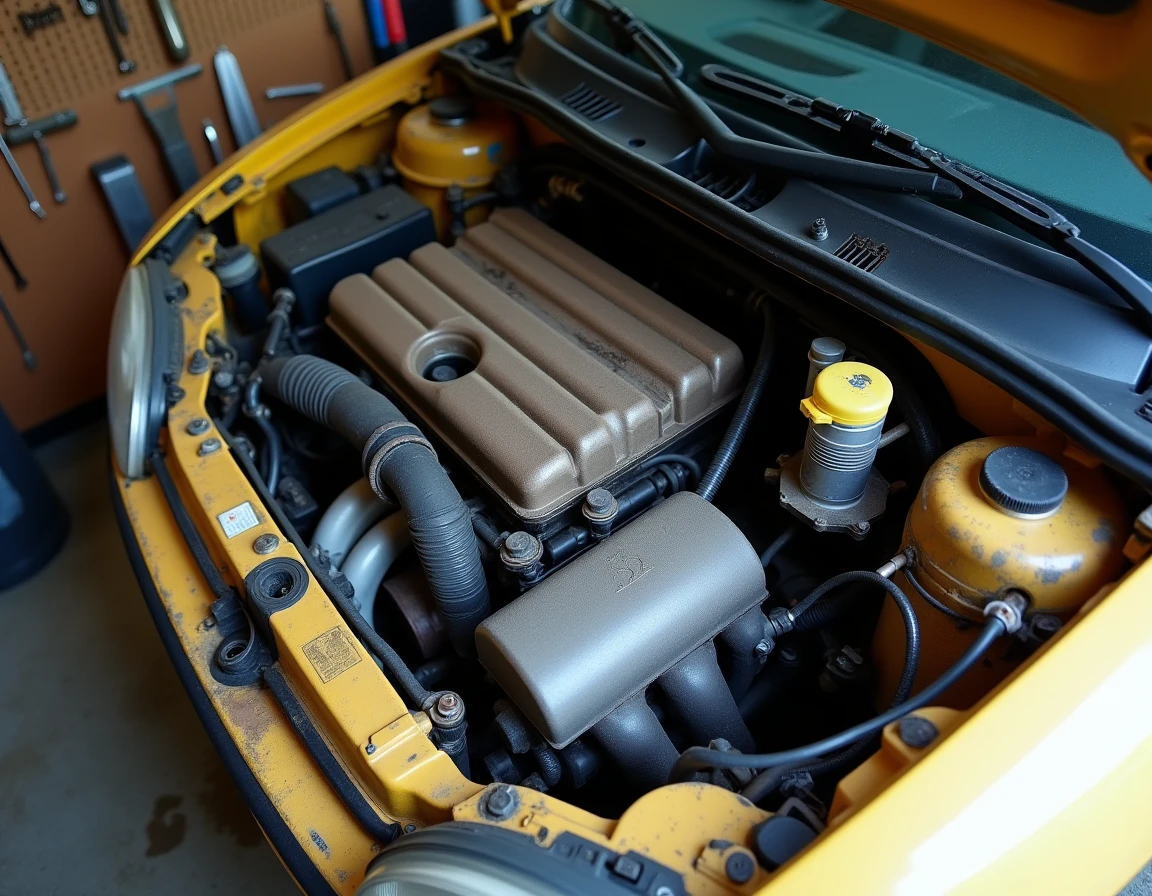
The message “engine failure risk” does not necessarily indicate ongoing mechanical destruction. On the Clio 4, several alerts stem from a peripheral defect (worn battery, computer issue, electrical problem) rather than a confirmed engine failure. Owners report that simply disconnecting the battery clears the message, without any diagnostics revealing anything abnormal.
This false positive phenomenon is poorly documented in traditional automotive media. We end up with an anxiety-inducing red light, a car that won’t start, and ultimately a diagnostic check that shows “no issues found.” The trap is to downplay the alert after one or two such episodes, while the next could signal a real problem.
The right approach is to never clear the message without reading the fault codes. A basic OBD-II reader is sufficient to retrieve the codes stored in the computer before disconnecting the battery. Without this step, we lose the information, and the mechanic works blindly.
To understand the risk of engine failure on Clio 4, it is essential to distinguish the electronic alert from a true mechanical symptom, which completely changes the course of action and the repair budget.
1.5 dCi or 1.0 TCe engine: the risks are not the same

People often refer to “engine failure Clio 4” as a single problem. In reality, the causes vary significantly depending on the engine installed under the hood.
The 1.5 dCi and its injection alerts
On the 1.5 dCi diesel engine, field reports mention pollution and injection alerts that appear without an immediate loss of power. The driver continues to drive normally, which delays addressing the issue. The real risk often comes from advanced clogging or a failing component in the injection circuit, not from a sudden mechanical failure.
The 1.0 TCe and the timing chain
The small 1.0 TCe three-cylinder petrol engine has received criticism on several points. Reports mention issues related to the timing chain, valves, and excessive oil consumption. These three combined elements create a dangerous cocktail: an elongating chain alters the timing, the valves suffer, and the lack of oil accelerates internal wear.
Monitoring the oil level between oil changes takes thirty seconds and can prevent a costly engine replacement. On the 1.0 TCe, notable oil consumption between services is a serious warning sign that should not be ignored.
Concrete symptoms before the dashboard alert on Clio 4
The red light is not always the first sign. Several indicators appear beforehand if you know where to look.
- Abnormal oil consumption: if the level visibly drops between oil changes, the engine is burning oil or has a leak. On the 1.0 TCe, this is a documented precursor sign of engine failure.
- Metallic noise on cold start: a brief knocking sound that disappears after a few seconds may indicate excessive play in the timing chain or a worn tensioner.
- Pollution or injection warning light on without loss of power: we drive normally, postponing the garage appointment. This is exactly the scenario that leads to gradual degradation.
- Blue smoke from the exhaust when hot: a classic sign of oil burning in the cylinders, not to be confused with white water vapor on cold starts.
These symptoms taken in isolation confirm nothing. Combined, they paint a picture that justifies an engine diagnosis without waiting for the red message to appear.
Reacting to the “engine failure risk” message: the field procedure
The message has just appeared. Here’s what to do concretely, in order.
If the engine is still running, turn off the air conditioning and radio, minimize the load, and pull over safely as soon as possible. Continuing to drive with this light on means accepting the risk of turning a manageable repair into a complete engine replacement.
With the engine off, check the oil level with the dipstick. A level below the minimum can sometimes explain the alert on its own. If the level is correct, connect an OBD-II reader (or call for assistance) to retrieve the fault codes before manipulating the battery.
The reflex to disconnect the battery to “reset” the computer often works to get going again. But without prior reading of the codes, the mechanic loses track of the fault. Note the codes on your phone, take a picture of the reader’s screen, and only then consider a reset if the situation requires it to reach a workshop.
One point on which feedback varies: some owners drive for weeks after a false positive without issue, while others experience a real failure in the following days. It’s impossible to decide without a diagnosis, and that’s precisely why reading the fault codes remains the priority action.
Clio 4 maintenance: what truly protects the engine
Preventive maintenance on the Clio 4 boils down to three actions that cover the majority of engine failure risks.
Oil changes performed at the correct intervals, using oil that meets Renault’s specifications, remain fundamental. Particularly for the 1.0 TCe, a shortened interval compared to the manufacturer’s recommendation may be justified if oil consumption is notable.
Checking the timing chain on the 1.0 TCe deserves specific attention. Unlike a belt that has a scheduled replacement, a chain is supposed to last the life of the engine, but feedback on this block shows that this is not always the case.
Regular electronic diagnostics, even in the absence of a warning light, allow for the detection of stored fault codes without any visible alert on the dashboard. An annual diagnostic check is inexpensive and can reveal a dormant problem before it becomes critical.
On the Clio 4, the line between benign electronic alerts and real mechanical risks remains thin. Keeping an OBD-II reader in the glove compartment and checking the oil level once a month are two simple habits that can make a difference when faced with a red message at startup.