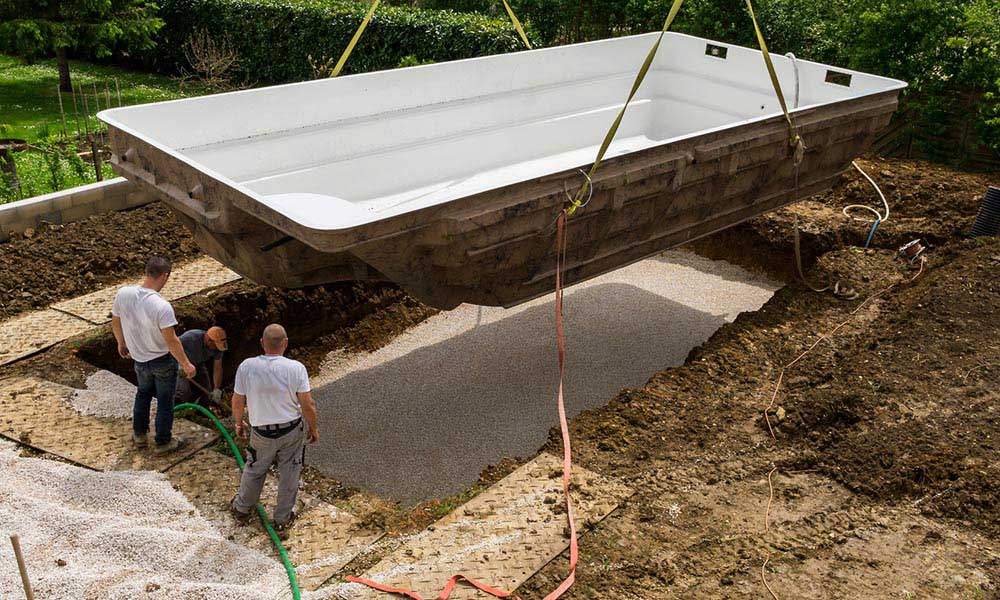
pool tax? What are the costs to build a pool? What are the pool installation costs? How is the development tax calculated? What is the tax and taxation of an underground, semi-underground, above-ground, or kit pool? WorkDiy provides an update on the taxes and fees for new private pools. What is it.
Article summary
- Taxes
- pool Define pool ownership Do not pay the
- property tax
on the pool
- The
- housing tax of the pool Set onPool installation
- Pool taxes of less than 10 m2
- Taxes for an above-ground pool
- Costs of a pool over 10 m2
- and semi-buried pool taxes
Buried
Taxes on
pools
The installation of a private pool in your garden will lead to an increase in property and residential taxes. In fact, any masonry construction such as a garden shed, a conservatory, or a pool increases the rental value of your property. This rental value is the basis for calculating the housing tax and property tax related to your home. The tax on private pools is calculated based on the taxable area of the pool per m2.
Declaring a pool is mandatory. Although declaring the new pool has a direct impact on local taxes and fees, such as property tax and housing tax.
Property tax on the pool
Building an underground or semi-underground pool will lead to an increase in property tax. Pools of less than 10 m2 and above-ground pools are not subject to property tax.
Calculating property tax for a pool is difficult to determine as it takes into account many criteria related to location. Therefore, we will not be able to estimate the amount of property tax after the installation of a new pool. The inheritance tax is revised upwards or downwards based on the revaluation ratio determined each year and the tax rate set by the community.
Do not pay property taxes for a pool
There is no miracle. Any new pool construction that cannot be moved without being demolished incurs additional fees on your property tax notice.
That said, you can gain 2 years of exemption from property tax on your pool by submitting a completion declaration of the pool work to the French administration. The condition to be eligible for this exemption from property tax on the pool for 2 years is to make your declaration within 90 days of the completion of your work.
This is done using module 6704 IL: Change of consistency or Assignment of constructed and non-constructed properties.
Housing tax on the pool
Building a pool increases the rental value of your property. Therefore, the housing tax of your home will be reassessed with the presence of a pool. It is very difficult to give you a percentage increase of your property tax because there are multiple coefficients to take into account among them:
- The amount of housing tax is set by municipalities or local authorities.
- According to the size of the pool in m2 of the pool.
Development tax on pools
You know the principle of the development tax, also known as TA. As its name indicates, the development tax applies to permit applications submitted on or after March 1, 2012. Development fees apply to any new construction that results in higher taxes.
The installation of a pool incurs development fees. These development fees for the pool are calculated based on the number of m2 of the pool. To determine the cost of development fees, the cost per m2 of pool is a non-tariff flat rate of 200 euros per m2. The calculation of the pool installation fees is crucial to account for all costs associated with the pool construction project on its land.
For example, for a 15 m2 pool, the amount of development fees for the pool will be 15 m2 x 200 euros = 3000 euros. This represents the tax base, but it is not what you will pay.
In fact, you will only pay a small percentage:
- the rate of the departmental share: between 1 and 2.5% of the taxable base cannot exceed 2.5%.
- the rate of the municipal share: between 1 and 5%.
Taxation of a pool
Regarding the taxation of pools, two types of constructions are distinguished. Initially, pools of less than 10 m2, above-ground pools, or any other type of pool that does not require excavation or masonry will not be taxed.
Secondly, pools over10 m2, underground or semi-underground pools, or any type of pool requiring excavation or masonry work.
The question of the taxation of kit pools is a debate. Although they may be considered easily removable and portable pools, these kit pools often require excavation work. As a result, kit pools, often made of wood, are considered taxable pools in the same way as underground pools.
Non-taxable groups
To avoid paying pool fees and different limits related to pool construction, you must opt for non-taxable pools. However, you will be limited in the size of the pool so that you do not pay taxes.
Pool fees of less than 10 m2
For a pool of less than 10 m2, it is not necessary to make a work declaration or obtain authorization from the town hall for the construction of a hard pool.
Except for living in a protected area such as a protected area, a classified site or awaiting classification, a nature reserve, a natural park.
To your question: “What is the size of the pool to not pay taxes? The answer is less than 10 m2. A pool of less than 10 m2 is not taxable and does not require any work authorization.
Tax on an above-ground pool
The above-ground pool is the only non-taxable pool. This type of pool can be dismantled or demolished and is therefore not considered a masonry element. Therefore, the above-ground pool is not taxable.
Choosing the size of a pool is important to avoid paying taxes. In fact, the larger the pool, the more taxes you will pay.
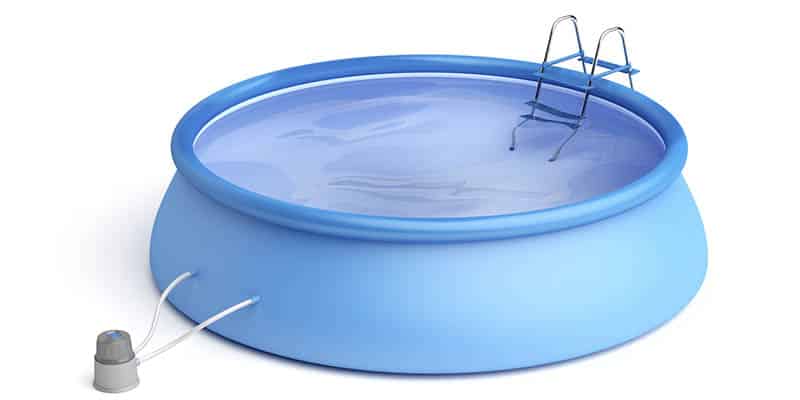
Above-ground pools are not taxed. When setting up an above-ground pool, you do not have to pay property or local taxes
.
Taxable pools
The so-called taxable pools are all pools over 10 m2. In this case, the taxation of the pool has serious consequences not only for local taxes but also for the development tax to be resolved.
Taxes for a pool over 10 m2
The construction of a pool over 10 m2 requires a preliminary work declaration to the administration. To obtain permission to build your pool over 10 m2, your project must comply with the urban planning regulations in force in your municipality.
The preliminary work declaration must be made in cases where you want to carry out pool construction of a size less than or equal to 100 m2 uncovered or whose fixed or mobile covering has a ground height of less than 1.80 m.
Building a pool over 10 m2 incurs fiscal and tax changes. The costs for a pool over 10 m2 are numerous: increase in housing tax, increase in property tax, and development tax to be paid.
Costs for underground and semi-underground pools
The rule established by the French tax administration is simple regarding the taxation of underground and semi-underground pools. Any pool will be taxed if its construction is fixed to the ground and cannot be transported or moved without being demolished.
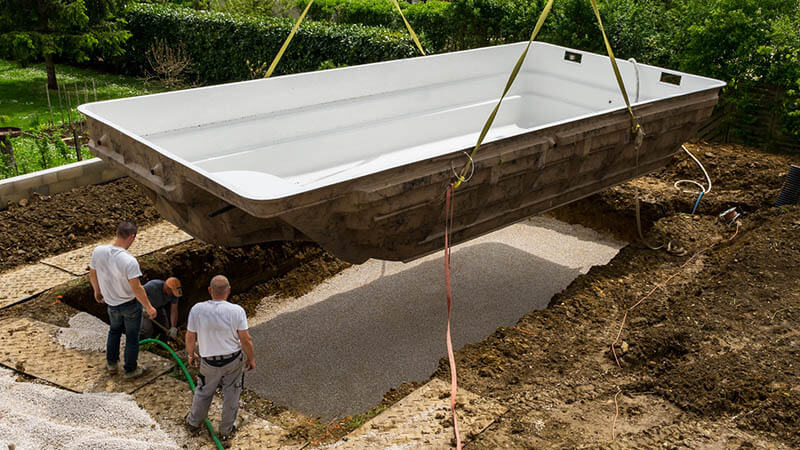
The semi-underground pool is taxable. More generally, all pools over 10 m2 are taxable on your property tax, local development tax on the pool
New summary of pool tax
In order to facilitate the understanding of pool taxation, we propose a table summarizing the tax and fiscal implications for the installation of a pool based on the number of m2 of the pool.
With all this information, feel free to share your project to create a private pool on your land. We help you determine the tax implications of installing a pool and the evolution of property and local taxes Type of pool Taxation of a pool: taxes and fees Pool fees of less than 10 m2 No tax, no pool tax Pool fees of more than 10 m2 Local taxes Property taxes Development fees to be paid Taxes above the property pool No tax, no pool tax Semi-underground pool fees Local taxes Property taxes Development fees to be paid Fees for buried pools Local taxes Property taxes Development fees to be paid .
Tag: tax pool semi buried