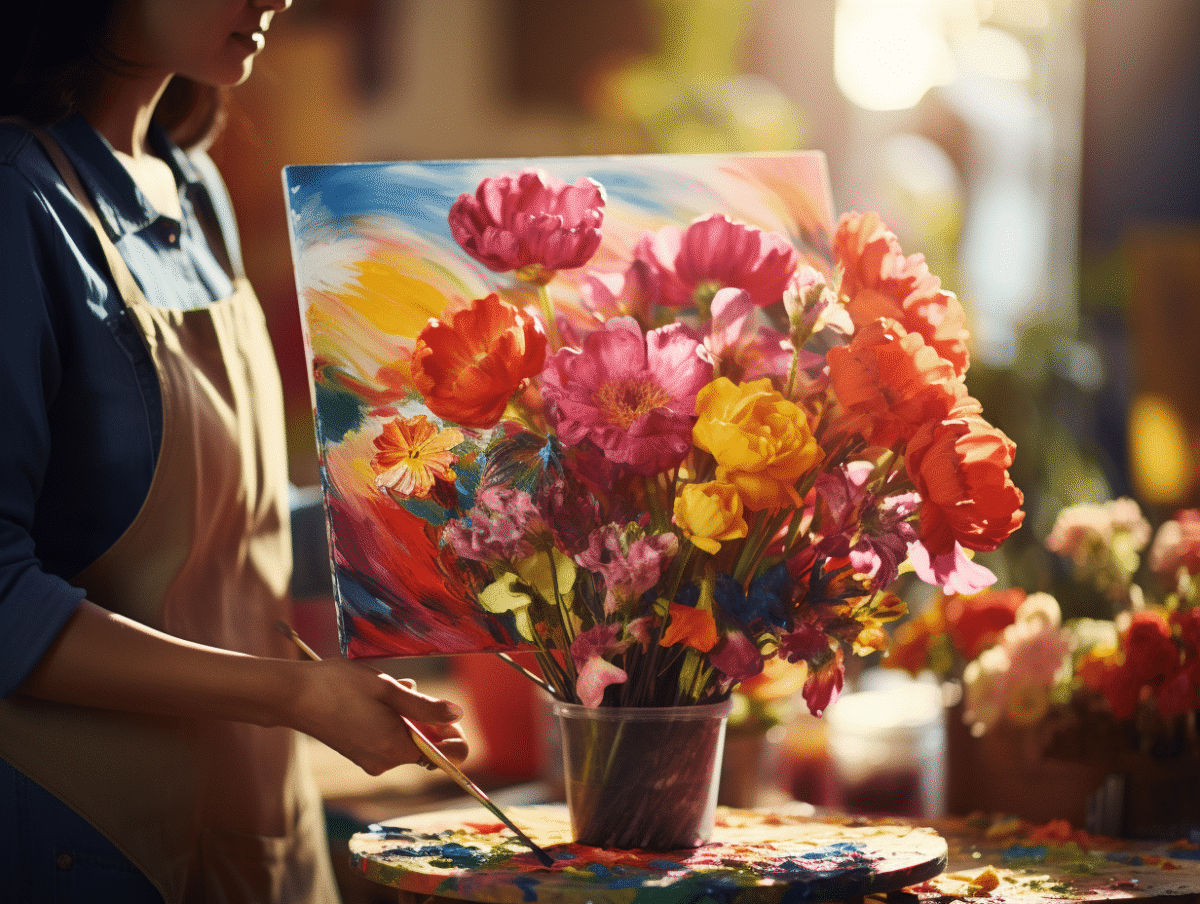
The art of painting relies heavily on the skill of combining colors to create harmonious tones and bring visual compositions to life. Behind every brushstroke lies a science of mixing, essential for any artist aspiring to master their medium. Understanding the color wheel, the relationships between primary, secondary, and tertiary colors, as well as the impact of light and texture on color perception, represents the foundation of a rich and expressive painting technique. Knowing how to mix colors effectively is therefore a necessary step for anyone wishing to excel in this ancient art.
The fundamental principles of color mixing
Acrylic paint: this type of paint is often recommended for beginners due to its multiple advantages. Not only does it dry quickly, but it also allows for a wide variety of mixing techniques. Mastering acrylic paint involves understanding how the primary colors blue, red, and yellow combine to create secondary and tertiary colors. In acrylic painting, time is a determining factor; the quick drying can influence the final shade of a mix, so be sure to act with precision and agility.
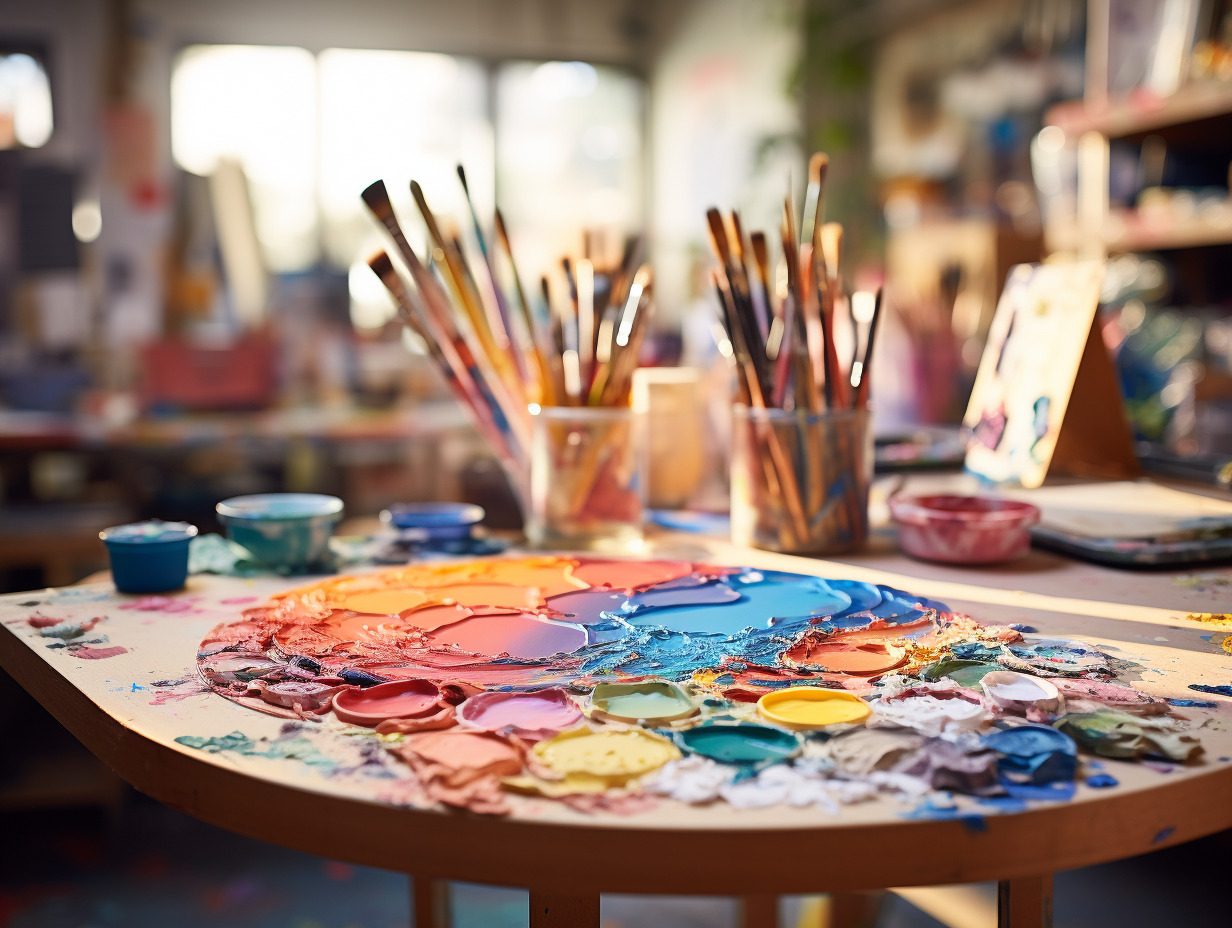
The mixing of paints is a key technique for the success of a work. Developing an eye for subtle nuances and variations between colors requires practice and experimentation. A color mixing chart can serve as an invaluable reference for artists of all levels. This chart guides the artist in creating new shades and adjusting tones. By painting effectively, one learns to anticipate the result of a mix even before the colors touch on the palette or canvas.
To paint effectively, it is important to master these mixing techniques. Patience and reflection are assets for designing a coherent and balanced palette. Color in painting is not just about selection, but also about application. Smooth transitions, nuanced shadows, and vibrant highlights can only be achieved with a deep understanding of mixing principles. Observe, experiment, and refine your technique to reveal the richness and complexity of your artistic expression.
Advanced techniques and tips for successful color mixing
For artists wishing to refine their mastery of acrylic painting, deepening mixing techniques is a decisive step. Enrolling in specialized training, such as the online course ‘Painting Made Easy‘ offered by the Milone Art Academy, can significantly enrich a painter’s technical repertoire. These courses distill tips for painting effectively and reveal methods to make the most of the properties of acrylic colors.
The artist and instructor René Milone illustrates through his courses how to learn to paint by transcending common obstacles encountered when mixing colors. His pedagogy is built on the idea that practice must be combined with theory. Students learn not only to mix colors intuitively but also to understand the complex chromatic interactions that underlie their creations.
The painting technique is an art of precision and finesse, where even the slightest variation in hue can alter the entirety of a work. The courses at the Milone Art Academy, with over 350 lessons and 400 hours of video content, guide artists through the subtleties of color in painting. The instructional videos allow for real-time visualization of mixing and an understanding of the subtle nuances generated by different mixing methods.
Tips for painting effectively with acrylics go beyond simply knowing primary and secondary colors. It involves developing a sensitivity to contrasts, color temperatures, and saturation. By integrating advanced techniques such as glazing, washes, and layering, artists can create effects of depth and luminosity that give their works an additional dimension. Thanks to this training, the path to excellence in painting seems not only clearer but also more accessible.