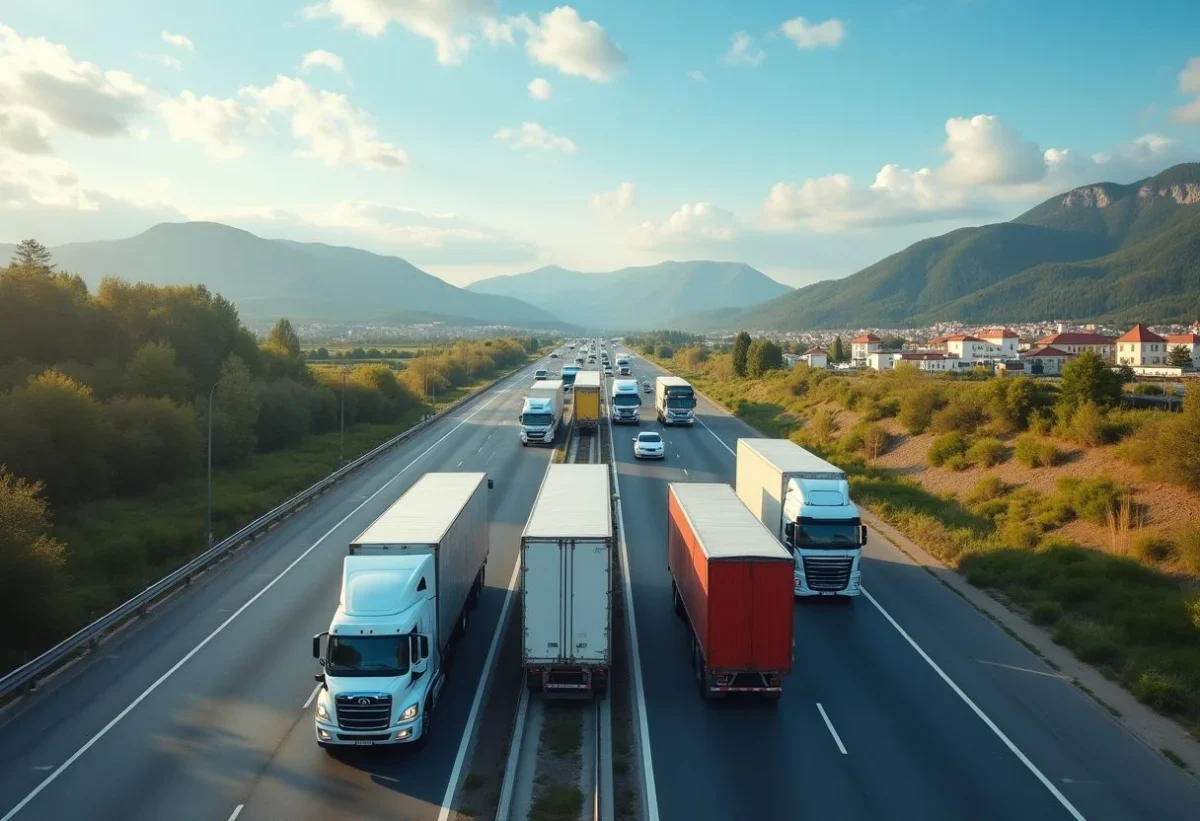
The picturesque landscapes of England not only attract tourists, but they also play a crucial role in the country’s vast transport network. With its winding roads and sophisticated infrastructure, England stands out as a strategic hub for the transport of goods in Europe. Carriers in England are key players in the economy, connecting local businesses to international markets. These professionals are the cogs in a well-oiled machine, constantly adapting to the challenges of Brexit, technological advancements, and growing environmental expectations.
The logistical challenges of Brexit
Since the UK’s departure from the European Union, the transport sector in England has had to adapt to new realities. The implications of Brexit have significantly impacted customs procedures and regulations, transforming the daily operations of carriers.
- Complexity of customs processes: The new customs barriers have introduced an additional layer of complexity for carriers. They now have to navigate through enhanced administrative formalities, which requires increased expertise in compliance.
- Evolution of trade agreements: With the exit from the EU, the UK has had to renegotiate its trade agreements. This has redefined trade routes and carrier priorities, necessitating rapid flexibility and adaptation to changes.
Technological advancements serving carriers
In the modern world, technology plays an instrumental role for carriers in England. Technological innovations are transforming the way carriers operate, bringing new and efficient solutions to logistical challenges.
Fleet management systems have become essential. They allow for real-time tracking of vehicles, optimizing routes and reducing operating costs.
Moreover, with the advent of autonomous trucks, the future promises a revolution in land transport. These autonomous vehicles could reduce dependence on drivers while increasing safety and efficiency.
Environmental expectations and their impact
The environmental impact of transport has become a major concern, prompting carriers to adopt more sustainable practices. In England, this awareness translates into concrete initiatives to reduce the carbon footprint of the sector.
The electrification of fleets is one of the responses to these ecological pressures. With the support of government policies, carriers are adopting electric or hybrid vehicles, thereby reducing their dependence on fossil fuels.
At the same time, green logistics is gaining popularity, pushing companies to rethink their supply chains for a more environmentally friendly approach.
Opportunities for growth and innovation
Despite the challenges posed by the current situation, carriers in England see opportunities for growth and innovation. The development of new infrastructure and the integration of cutting-edge technologies outline a promising future for the industry.
- Modern infrastructure: The expansion and modernization of roads and ports offer new development prospects for carriers. These improvements facilitate the flow of goods and reduce transit times, thereby increasing competitiveness.
- Technological integration: Advances in digital and information technologies enable the carrier in England to equip themselves with efficient tools to manage and optimize their operations.
- International collaboration: Carriers in England also benefit from collaborations with international partners, thereby enhancing their ability to meet the demands of global markets.