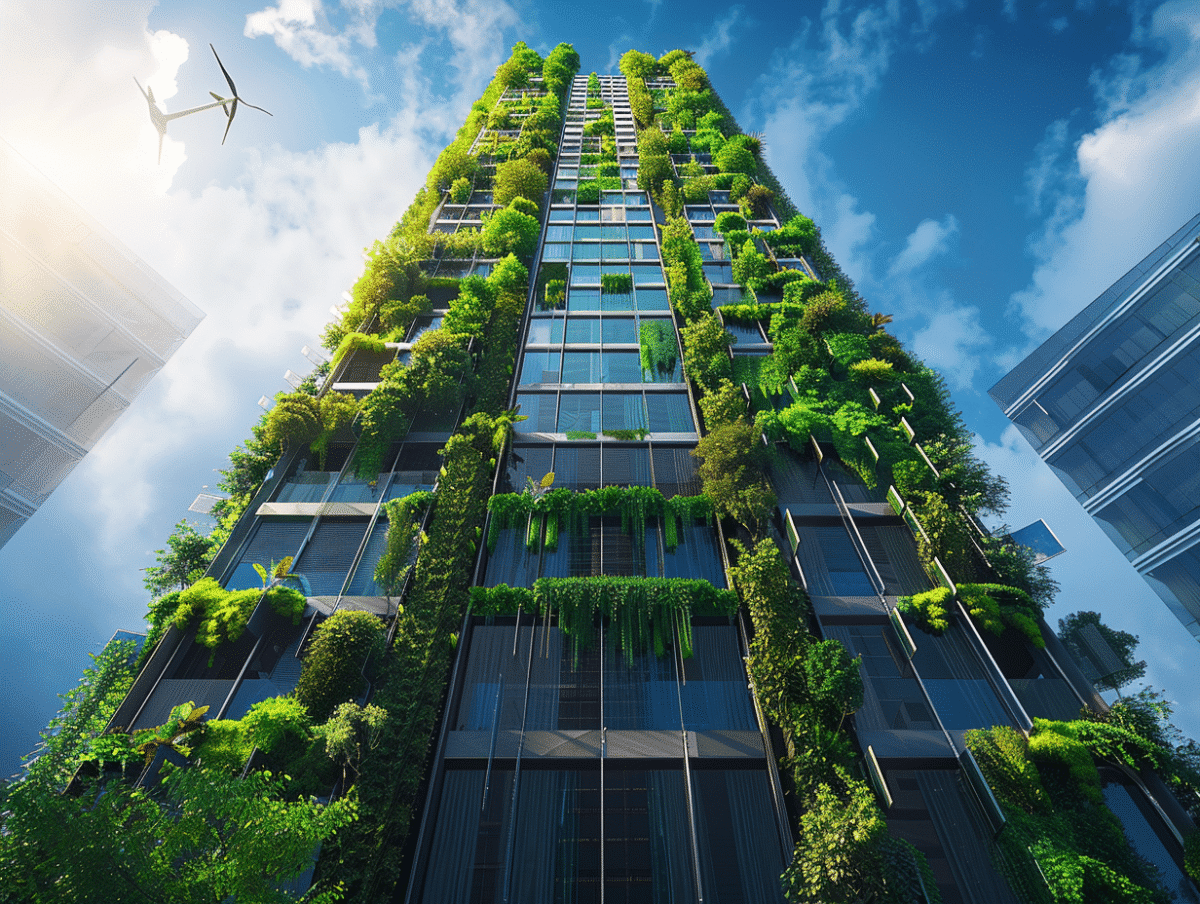
At the heart of current environmental challenges, sustainable architecture stands as a true lever for urban transformation. Technological advancements and new construction methods have enabled the emergence of buildings with a low ecological impact, consuming less energy and harmoniously integrating into their environment. These innovations, ranging from eco-friendly materials to bioclimatic design, are revolutionizing not only urban aesthetics but also the lifestyle of residents. The integration of nature in the city, the reduction of carbon footprints, and the promotion of renewable energy are key aspects of this transformation, reflecting the profound impact of sustainable architecture on contemporary society.
Recent Advances in Sustainable Architecture and Their Environmental Impact
In the relentless pursuit of environmentally friendly urban planning, projects such as the Powerhouse Brattørkaia in Trondheim stand out. This positive energy building, a true technological feat, illustrates the effectiveness of sustainable constructions by generating more energy than it consumes. The use of cutting-edge technologies to reduce energy consumption serves as a model, proving that buildings can be key players in the energy transition.
Consider the Smart Forest City Cancun, an ambitious project envisioned as an integrated ecosystem, where sustainable construction meets biodiversity. The planning of this site includes over 7.5 million plants and is designed as a response to current climate challenges. In this same vein, the Citicape House in London, with its green wall touted as the largest in Europe, is committed to a sustainable façade that will produce six tons of oxygen per year, reaffirming the vital role of urban greening.
Innovation in materials is at the forefront of these transformations. The Zero Waste Bistro, designed entirely with recycled and recyclable materials, offers a perspective on the circular economy applied to architecture. Wojciech Morsztyn’s floating house, on the other hand, ventures beyond solid ground, proposing an alternative solution in the face of rising sea levels, powered by a clever mix of solar and electric energy. These examples, among others, illustrate the potential of trombe walls, green façades, and modular structures in reducing the environmental impacts of construction.
Innovative Materials and Emerging Technologies in Sustainable Architecture
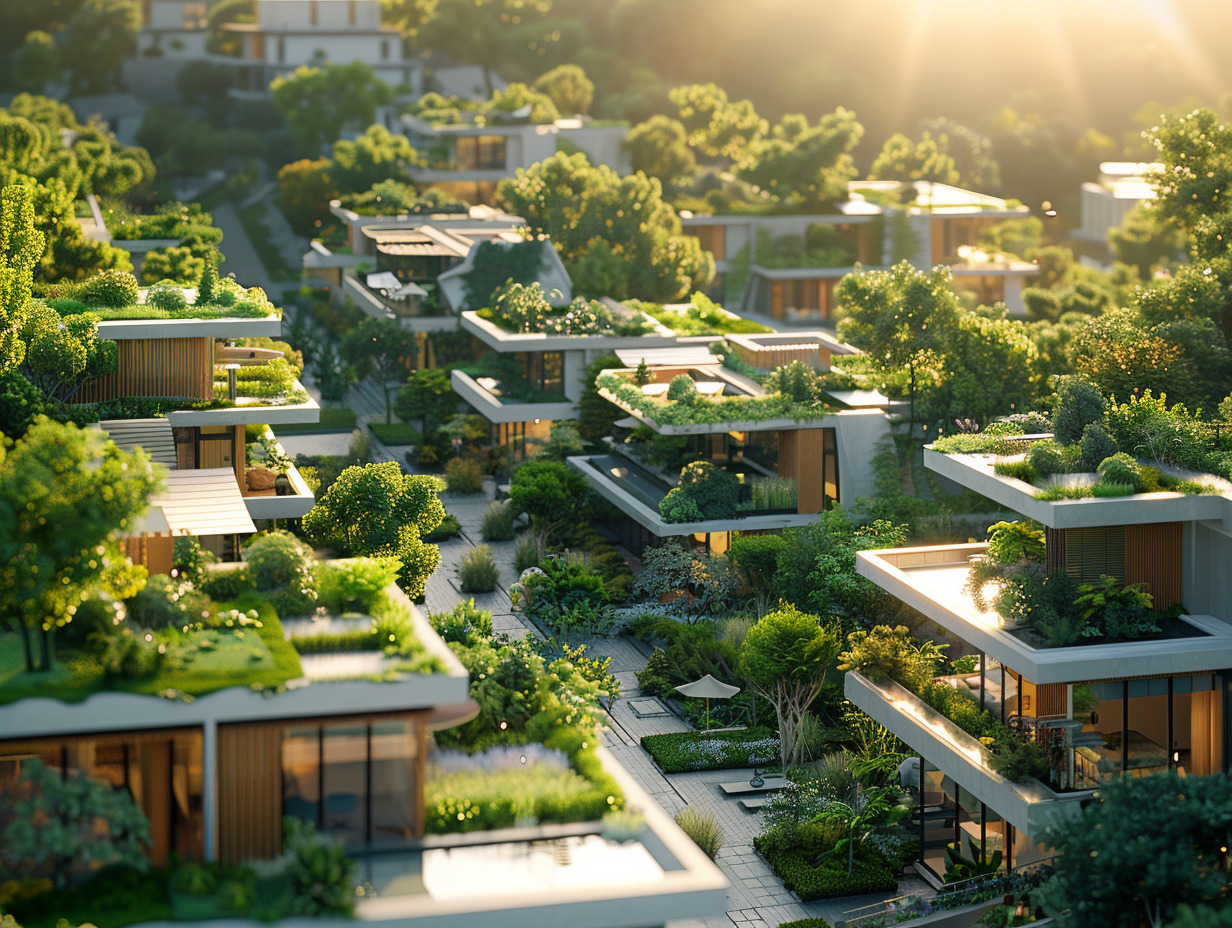
The construction industry, driven by ecological urgency, is evolving through the integration of innovative materials and emerging technologies. The California-based startup Geoship is introducing revolutionary bioceramic domes to the market, which present a concrete response to sustainability issues. These structures, potentially carbon-negative, open new perspectives for ecological architecture, far removed from the carbon footprint of traditional materials.
In the field of construction materials, Powercrete® stands out for its high thermal conductivity, facilitating the installation of high-voltage cables underground and thus actively participating in the energy transition. This special concrete is an example of adapting existing materials to environmental requirements, reducing the visual and physical impact of energy infrastructures on the landscape.
The concept of the ECO-SANDWICH House illustrates another step towards innovative design, with its eco-responsible wall panel. This first panel contributes to significant energy savings and directly addresses major environmental issues. The ECO-SANDWICH House represents a notable advancement in the use of sustainable construction materials, providing quality insulation while respecting the environment.
These innovations are just the tip of the iceberg in a constantly evolving field. The emergence of these materials and technologies symbolizes an industry that is reinventing itself, striving for increased energy efficiency and a reduced ecological footprint. Stakeholders in sustainable architecture are called to adopt these new solutions to shape the living spaces of tomorrow, in harmony with the ecological imperatives that characterize our time.